The Call That Sounded Perfect
A 74-year-old in DLF Sector 5 received a call at 2 PM on a Tuesday. The voice on the other end was unmistakably his grandson's the same cadence, the same slight nervousness, the same way he said Dada before asking for help.
Dada, I'm in trouble. I had an accident. I need money urgently. Don't tell Mom and Dad.
The grandfather's heart stopped. He didn't ask questions. He called his bank, withdrew Rs. 4 lakhs, and was at a nearby wire transfer office within 45 minutes.
By the time his actual grandson called him that evening safe, unharmed, in London, the money was gone.
The voice was so perfect, the emotional manipulation so precise, that the grandfather hadn't questioned it for a moment. Not because he's cognitively impaired. Not because he's gullible. But because AI voice cloning has reached a point where it's indistinguishable from reality.
This is not a future threat. It's happening in Gurgaon now, in DLF, in Sector 43, in high-rises across the city. And it's targeting seniors with surgical precision.
Why Gurgaon Seniors Are Uniquely Vulnerable
Gurgaon's structure creates perfect conditions for voice scams:
1. Geographic Isolation from Family
Your parent lives in India. Their children are in Singapore, London, New York. Real emergencies happen. Money transfers are routine. When the "grandson in London" calls with an urgent problem, there's no immediate way to verify and the cost of being wrong (not helping a family member in crisis) feels catastrophic.
2. Trust in Technology Without Understanding It
Gurgaon seniors have adapted to smartphones, WhatsApp, and video calls. They trust these technologies. The leap to assuming an audio call is definitely your grandson feels reasonable until it isn't.
3. Emotional Triggers Designed for Maximum Urgency
The scammer knows family hierarchies. They know the grandson is abroad. They know the emotional weight of emergency + don't tell parents creates a decision-making environment where verification feels like betrayal rather than safety.
4. Banking Access Without Friction
Your parent can walk into their bank branch and withdraw large amounts of cash within minutes. No one questions it. Banking has become frictionless which is normally good for convenience, catastrophic for fraud prevention.
5. Attendant Presence Without Authority
Your parent has a home attendant who might overhear parts of conversations but has no authority to question decisions or verify claims. They're present but not protective.
How AI Voice Cloning Works (And Why It's Scary)
You need to understand the technical reality to understand the threat.
AI voice cloning technology can now:
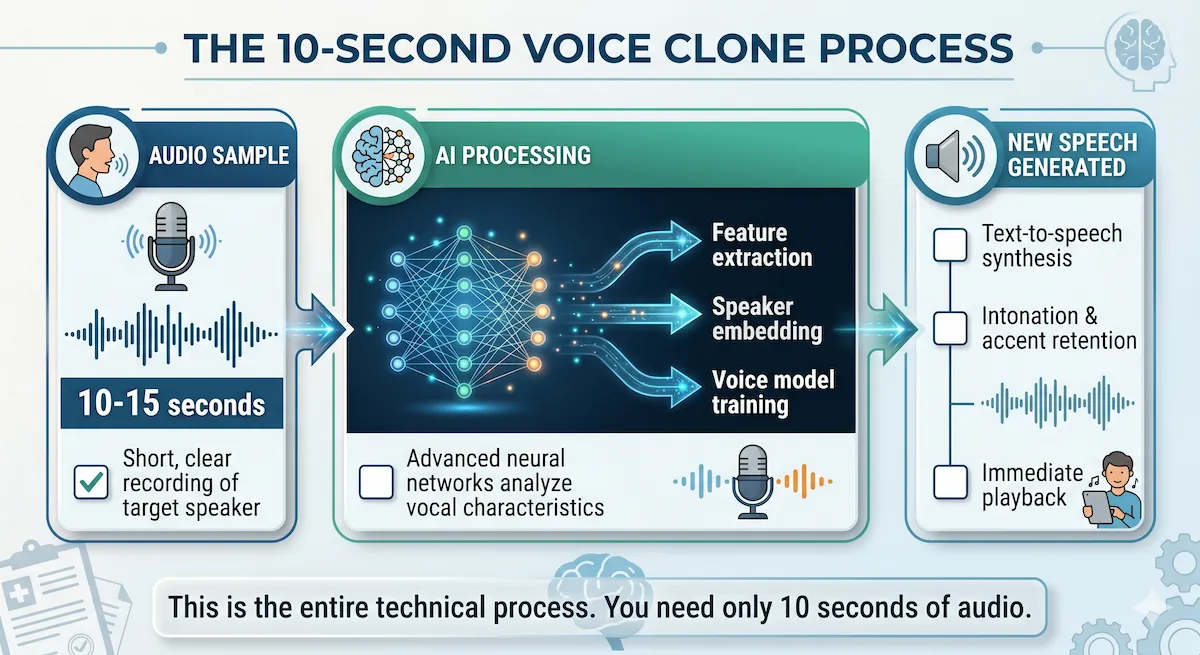
Clone a voice from 10-15 seconds of audio: A short WhatsApp voice message, a YouTube video, a family video call recording this is enough.
Generate new speech that sounds identical: The AI doesn't just replay the original. It learns the acoustic patterns and generates entirely new sentences in that voice.
Operate in real-time: Phone calls happen live, with natural pauses and responses, making them sound even more authentic.
Incorporate emotional authenticity: The scammer adds the right amount of panic, desperation, or urgency. The emotional tone matches the "grandson's" personality.
The technology is available. It's not expensive. It requires minimal technical skill to deploy. And it's already being used in India.
Here's what makes it particularly dangerous for seniors:
Traditional Phone Fraud | AI Voice Clone Fraud |
|---|---|
Recognition Factor | Scammer sounds like a stranger; victim is on guard |
Verification Options | Victim can hang up and call back to verify |
Decision Speed | Fraud may sound suspicious; victim has time to think |
Repeat Targeting | One scam per victim; if caught, victim becomes cautious |
Proof | If caught, victim might recognise the deception |
The Clinical Reality: Why This Works on Smart Seniors
This is important: AI voice scams work on intelligent, cognitively sharp seniors. This is not a dementia problem. This is a human problem.
The scammer exploits:
Emotional Decision-Making: When you receive a call about a family member in danger, your emotional brain overrides your logical brain. Verification feels like doubt. Speed feels like love.
Trust in Technology: If you can hear your grandson, the assumption is it is your grandson. The idea that a computer can synthesise a voice perfectly doesn't feel real until it happens to you.
Plausible Deniability: The scammer knows your grandson is abroad (common knowledge in Gurgaon families). They know he would call if in crisis. They know your instinct would be to help quickly, without verification.
Sunk Cost Thinking: By the time your parent realises something's wrong, the money has been sent. They've already committed psychologically. The shame and self-blame can prevent reporting.
The Prevention Framework: The "Family Safe Word"
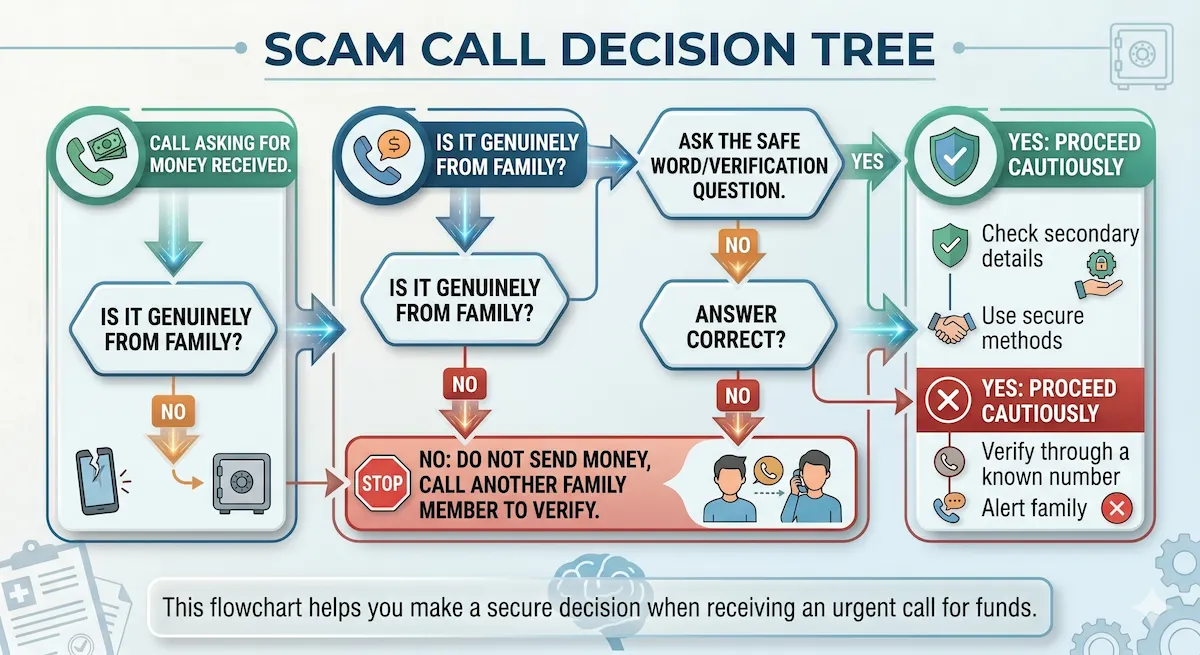
This is the most practical protection available: Establish a pre-agreed verification protocol that feels natural, not paranoid.
Step 1: Create a Family Safe Word or Verification Protocol
Before any crisis happens, have this conversation with your parent:
If you ever get a call from me (or any family member) asking for money urgently, we have a verification system. You will ask me [safe word/security question]. I will answer correctly. If I can't answer, you will not send money, no matter how urgent I say it is. This isn't doubt it's protection.
The safe word should be:
Something only family knows (not a birthdate or readily available information)
Easy for your parent to remember
Not something that would be obvious in social media or family conversations
Examples:
What's the name of the dog we had when I was five?
What restaurant did we go to on my 16th birthday?
What's the first word of our family motto?
Or a simple code word: If you need to verify, ask me to say the word 'umbrella'. If I can't say it naturally, don't send money.
Step 2: Make It Non-Negotiable
When establishing this, be clear: This is not optional. If you call asking for money and can't verify, I expect you to refuse, even if I sound desperate.
This removes the guilt burden. Your parent isn't doubting you; they're following a protocol you established.
Step 3: Test It
Have your parent practice. Call them (actually, a real call), ask for money, and see if they ask the verification question. If they don't, reinforce it. Make it habitual.
Step 4: Communicate It to Your Parent's Attendant
If your parent has a home attendant, brief them:
If you hear my parent on a call being asked for money, ask them to verify with the family safe word before any money goes anywhere. If they refuse to ask for verification, call me immediately.
The attendant is present. They can be a protective layer.
Step 5: Brief Banking Staff (Optional But Effective)
Some seniors' banks allow family members to add a note to their account: For any cash withdrawal over Rs. 50,000, require a family verification call. This creates a friction point.
The Broader Tech Reality: What Seniors Need to Know
Beyond the safe word, your parent needs basic literacy about AI voice technology not to become paranoid, but to understand the threat:
Voice cloning is real: A short audio sample is enough. That video call recording you have, your voicemail greeting, a YouTube interview if you're a public figure is enough.
It's getting better, not worse: The technology improves monthly. Detection is getting harder, not easier.
It's already being used: This isn't theoretical. It's happening in India, in Gurgaon, right now.
But it's also detectable: While the voice is perfect, there are behavioural markers the scammer doesn't know family details, gets vague when asked specifics, and responds with urgency when pressed for verification.
The safe word works: A simple verification protocol defeats AI voice cloning because the scammer doesn't have the answer to your family's private question.
Closing Remarks
Your parent is not naive for almost falling for a voice scam. They're human. A perfect imitation of their grandson's voice, combined with emotional urgency and the implicit trust between generations, defeats careful thinking. It defeats careful thinking in you too.
This is not a character flaw. This is technology advancing faster than our collective wisdom about it.
The protection is simple: a family safe word, pre-established and practiced. Not paranoia. Preparedness.
Gurgaon is a city of geographic dispersion and technological connectivity. Your parents can call you from anywhere, anytime. That same technology allows someone else to sound like you perfectly. The safe word a small, private family protocol is the bridge between trust and protection.
Have the conversation this weekend. Choose the safe word together. Test it. Make it a family norm, not a family secret. The moment when your parent instinctively asks for verification without shame is the moment the scammer has no power.
Red Alert Card: The Warning Signs (In Real-Time)
If your parent receives a call claiming to be family asking for money, these are the indicators that it might be a scam:
Urgency + Secrecy Combined: I need money urgently, and don't tell your children/spouse. Real emergencies do happen, but the combination of urgency + instruction to hide it is a classic manipulation pattern.
Emotional Distress Without Context: The voice sounds panicked or distressed, but when asked directly What exactly happened?, the answer is vague. A real person in crisis can describe what happened.
Request for Specific Payment Method: Send it via wire transfer to this account or Buy gift cards and read me the codes. Legitimate family emergencies usually allow flexibility in how money is transferred.
Caller ID Spoofing: The number showing is your grandson's number, but something feels off. (Modern scams can spoof numbers convincingly; the voice is the real authentication, not the number.)
Pressure Against Verification: When you say Let me call your mother to confirm, the response is No! Don't! She'll be worried or There's no time, Dada, please just send it. Real family members understand the need to verify.
The Call Ends Abruptly: After the money has been sent, the caller hangs up. They don't stay on the line to confirm, to reassure, to say thank you. The relationship ends the moment money is committed.
Follow-Up Requests: A second call (from the same voice, or a different "family member") asking for more money. The first transfer didn't go through, we need more. Legitimate transfers go through or don't; they don't partially succeed.
FAQs
What if my parent genuinely forgets the safe word when they're panicked, and it's actually me calling?
My parent lives alone and might not want to seem paranoid by asking for verification from their own grandson. How do I frame this?
Is there any technology that can detect AI voice clones in real-time during a call?