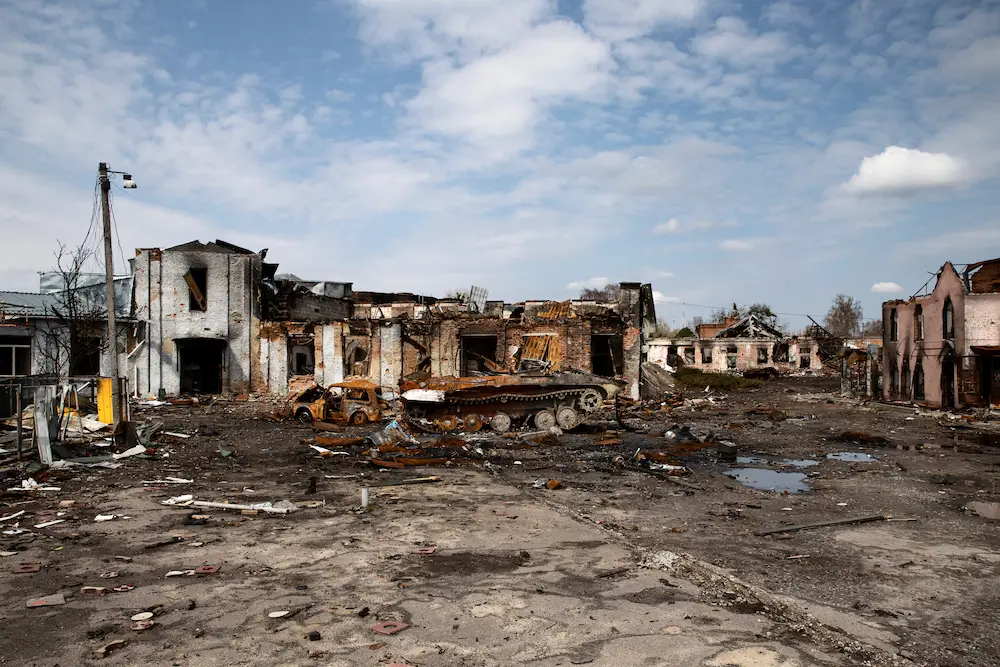
The two fronts
When we think of war, we visualize immediate destruction: crumbling infrastructure, economic collapse, and the tragic loss of life. However, modern science has uncovered a much more insidious consequence of conflict, one that remains etched into the biology of survivors long after the smoke clears.
Recent research into Geroscience (the study of the biology of ageing) suggests that the extreme stress of war acts as a powerful biological accelerator, forcing the human body to age at a rate far beyond the passage of the calendar.
1. The biological weathering of conflict
In clinical terms, the body does not experience war just as an emotional event, but as a series of metabolic insults. This process is often called weathering. When a person lives in a conflict zone, their neuroendocrine system is in a state of permanent red alert. The constant release of cortisol and adrenaline which were designed for short bursts of survival, become chronic. Over time, this high-voltage state damages the mitochondria (the power plants of our cells).
As the mitochondria fail, they leak Reactive Oxygen Species (ROS). Think of this as toxic biological exhaust that rusts our DNA. The result is a phenomenon known as Accelerated Cellular Senescence, where cells stop dividing and start secreting inflammatory signals that age the surrounding tissue.
2. Epigenetic scars: War written in DNA
One of the most profound discoveries in recent research is that war can actually change the software of our DNA. While our genetic code remains the same, the Epigenetic Clock (the markers that turn genes on or off) shifts dramatically under the stress of conflict.
Telomere Shortening: Studies of refugees and soldiers have shown significant shortening of telomeres, the protective caps on the ends of our chromosomes. Short telomeres are a primary hallmark of biological ageing and are linked to earlier onset of heart disease and dementia.
The Intergenerational Ghost: Perhaps most startling is that these epigenetic changes can be passed down. The stress signatures of parents living through war can affect the biology of their unborn children, predisposing the next generation to higher rates of metabolic and inflammatory diseases.
3. Inflammaging: The silent battlefield
War creates a state of inflammaging - a chronic, low-grade systemic inflammation. This is driven by the immune system being over-sensitized by trauma and poor nutrition.
In a conflict environment, the body’s search and destroy cells (macrophages) become senescent. Instead of fighting off infections, they begin to attack healthy tissue. This leads to what clinicians call the compression of morbidity in reverse: instead of living healthy until the end, survivors of war often experience the onset of old age diseases like hypertension, Type 2 diabetes, and osteoarthritis about 10 to 15 years earlier than their peers in peaceful regions.
4. The path to rejuvenation: Peace as medicine
If war accelerates the clock, can peace and intervention slow it down? The latest research into Longevity Medicine suggests that some of this damage is modifiable.
Social Buffering: Deep social connection and community support have been shown to lower IL-6 (an inflammatory marker) and buffer the brain against the erosion of the hippocampus caused by war-time cortisol.
Mitochondrial Repair: New therapies, such as mitochondrial transplantation and NAD+ boosters, are being explored to help survivors reset the cellular damage caused by chronic survival stress.
The Gpld1 Signal: Physical movement, even in its simplest form, signals the liver to produce the enzyme Gpld1, which helps wash the brain’s blood vessels of the proteins that accumulate during high-stress ageing.
Costs beyond the battlefield
War is not just a geopolitical event; it is a biological one. By understanding that conflict accelerates the human clock, we can better design personalized longevity protocols for survivors.
Treating a survivor of war is not just about psychological healing; it is about clinical pre-habilitation to protect their mitochondria, preserve their telomeres, and ensure that their biological age does not rob them of their hard-won future.
The Impact of war | The biological consequence | The long-term risk |
Chronic Cortisol Spike | Mitochondrial Damage | Early Heart Disease |
Epigenetic Shifts | Telomere Shortening | Accelerated Frailty |
Immune Overdrive | Inflammaging (SASP) | Early-Onset Dementia |
Nutritional Scarcity | Autophagy Failure | Metabolic Syndrome |
FAQs
Can a period of intense life stress or trauma years ago cause me to age faster today?
What is the difference between chronological age and biological age?
How does physical movement help "wash" the brain's blood vessels after high stress?