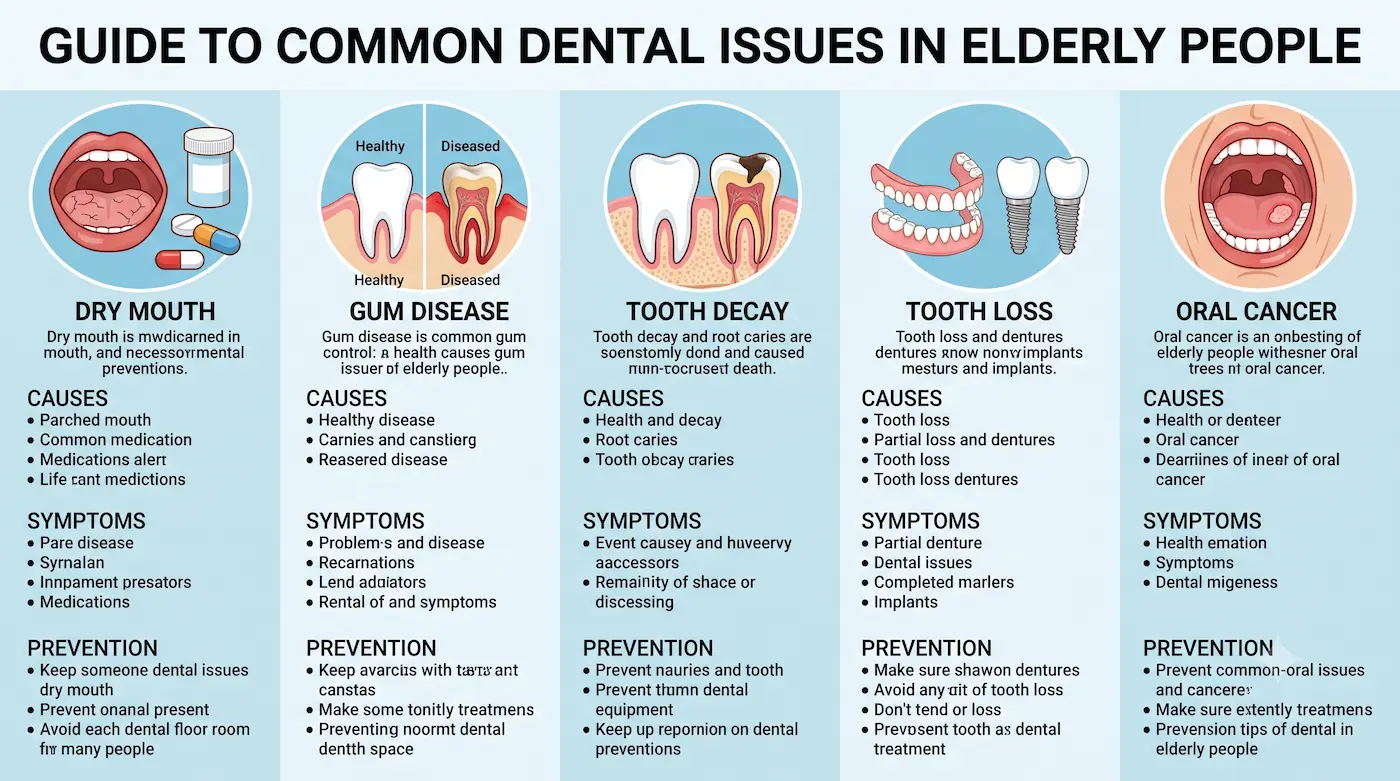
Nearly a third of older adults aged 65 to 74 years in India are missing all their teeth. Most families treat this as an inconvenience a denture problem, a chewing problem, an aesthetic issue. What is rarely communicated is that the mouth is not a separate system. It is the entry point to every other system in the body and chronic infection in the gums travels, biochemically and bacterially, straight to the heart, the blood vessels, and the brain. The connection between periodontitis and cardiovascular disease is no longer speculative. It is one of the most consistently replicated findings in modern medicine.
The mouth gets forgotten in senior healthcare
When a 70-year-old man attends his quarterly cardiologist visit, his blood pressure is checked, his lipid profile reviewed, his medications adjusted. His teeth are not examined. His gum health is not asked about. The possibility that the chronic low-grade infection silently progressing in his periodontium is contributing to his elevated CRP and his endothelial inflammation and therefore to his cardiovascular risk is almost never raised.
This is a gap with consequences. Poor oral health in geriatric populations can lead to life-threatening conditions, including malnutrition, dehydration, brain abscesses, valvular heart disease, joint infections, cardiovascular disease, and pneumonia. These are not theoretical risks. They are documented clinical outcomes of neglected oral health in elderly patients outcomes that develop silently, over years, without a single dental symptom loud enough to force the issue.
In urban Indian senior households, the neglect is partly cultural dental visits have historically been crisis-driven, not preventive and partly practical. Mobility limitations, cost, and the absence of dental care as part of senior health monitoring all contribute. The result is a generation of urban elderly with significant oral disease that nobody is systematically looking for.
How the mouth communicates with the heart
The mechanism connecting periodontitis to cardiovascular disease operates through three converging pathways.
The inflammatory pathway. Periodontitis is a chronic bacterial infection of the tooth-supporting tissues the gingiva, the periodontal ligament, and the alveolar bone. The resident oral pathogens particularly Porphyromonas gingivalis, Treponema denticola, and Tannerella forsythia — trigger a sustained local immune response. But inflammation does not stay local. The evidence consistently supports an association between chronic periodontal inflammation and cardiovascular risk, mediated by systemic dissemination of proinflammatory cytokines including IL-6, TNF-alpha, and CRP, and microbial products that promote endothelial activation and atherogenesis. In practical terms: the inflamed gum tissue is continuously releasing inflammatory signals into the bloodstream, and those signals promote the same atherosclerotic cascade that drives coronary artery disease and stroke.
The bacteraemia pathway. Periodontitis contributes to systemic inflammation by promoting bacteraemia during personal oral hygiene, chewing, and dental treatment. Every time a person with periodontitis brushes their teeth, chews food, or receives dental treatment, oral bacteria enter the bloodstream. In a young adult with a healthy immune system, this transient bacteraemia is rapidly cleared. In an elderly person with reduced immune function, multiple comorbidities, and pre-existing cardiovascular disease, this repeated seeding of the bloodstream with oral pathogens has the potential to directly infect atherosclerotic plaques and heart valves.
The endothelial dysfunction pathway. Periodontal pathogens trigger endothelial oxidative stress and systemic inflammation via Toll-like receptors, NF-kB signalling, and nitric oxide dysregulation, contributing to endothelial dysfunction and atherogenesis. The inner lining of blood vessels the endothelium when activated by these bacterial and inflammatory signals, becomes sticky and pro-coagulant, accelerating plaque formation and raising the risk of acute cardiovascular events.
The epidemiological verdict is now consistent. There is consistent and strong epidemiological evidence that periodontitis imparts increased risk for future cardiovascular disease, independent of established cardiovascular risk factors. Furthermore, there is moderate evidence that periodontal treatment reduces systemic inflammation as evidenced by reduction in C-reactive protein and improvement of both clinical and surrogate measures of endothelial function. Treating the mouth, in other words, has a measurable effect on cardiovascular risk markers not just on gum health.
The Clinical Reality for Indian Seniors in Gurgaon
In India, complete edentulism affects 10.7% of adults and partial edentulism affects nearly 58.8% of the population figures that make India's oral health burden among the highest in Asia. For seniors specifically, the numbers worsen sharply with age.
The situation in urban Gurgaon is complicated by a specific paradox: this demographic has the financial means to access dental care but the lowest habit of doing so preventively. Dental visits among urban Indian seniors are almost universally reactive a broken tooth, a denture that no longer fits, pain that has become unbearable. The concept of a routine dental check-up as part of senior health maintenance is almost entirely absent from how families in DLF Phase 1 think about their parents' healthcare calendar.
The cardiovascular overlap is acute in this population. Many urban Gurgaon seniors are already managing hypertension, coronary artery disease, or diabetes all of which independently worsen periodontal disease, and all of which are themselves worsened by the systemic inflammation that untreated periodontitis drives. Oral health complications such as edentulism, gum disease, and poor dental cleanliness are linked with other diseases like diabetes, cardiovascular diseases, and depression that affect self-rated health. This is a bidirectional reinforcing cycle and it is currently being left entirely unaddressed in most senior healthcare plans in Gurgaon.
There is also a nutritional dimension that families consistently underestimate. Edentulism impairs mastication and dietary choices in older adults, often leading to malnutrition and associated health risks. A senior who cannot chew comfortably eliminates hard foods raw vegetables, fruits, nuts, whole grains and defaults to soft, high-carbohydrate foods that worsen diabetes, metabolic syndrome, and cardiovascular risk. The mouth, again, is not an isolated organ.
Practical steps: What families can do
1. Schedule a dental examination every six months, not just when something hurts The single most impactful change a family can make is to add a biannual dental check-up to their parent's healthcare calendar. This should include periodontal probing an assessment of gum pocket depth that detects periodontitis well before it becomes symptomatic not just a visual check for cavities. Request specifically that the dentist assess periodontal health and not just the teeth themselves.
2. Ensure effective daily oral hygiene and supervise it if necessary The high levels of dental plaque in elderly patients reflect the large proportion who could not, or did not, brush their teeth. For seniors with arthritis, hand weakness, or cognitive decline, standard manual toothbrushing may be physically difficult to perform effectively. An electric toothbrush with a large handle significantly reduces the manual dexterity required. Interdental cleaning floss or interdental brushes is essential for removing the plaque that a toothbrush cannot reach, and is the intervention most directly protective against periodontitis. If a parent is resistant or unable to do this themselves, a caregiver must be involved.
3. Tell the cardiologist about existing periodontitis and tell the dentist about existing heart disease These two specialists almost never speak to each other about a shared patient. The family can bridge this gap. If a parent has established periodontitis and is being managed for cardiovascular disease, the cardiologist should know. If a parent has a prosthetic heart valve or a history of infective endocarditis, the dentist must know before any dental procedure antibiotic prophylaxis before dental work may be required to prevent bacterial seeding of the valve.
4. Address denture fit and function do not accept chronic discomfort A poorly fitting denture causes chronic mucosal trauma, accelerates bone loss in the jaw, and makes effective chewing impossible. Dentures typically require assessment and relining every two to three years as the underlying bone changes shape. A senior who has been wearing the same dentures for five or more years without review almost certainly has a poor fit and the nutritional consequences of that poor fit compound over time.
5. Treat dry mouth as a medical symptom, not a minor inconvenience Many medications commonly prescribed to elderly patients antihypertensives, antihistamines, antidepressants, diuretics cause significant dry mouth (xerostomia) as a side effect. Saliva is the mouth's primary protective mechanism against bacterial overgrowth and dental decay. Dry mouth in an elderly patient dramatically accelerates both dental caries and periodontal disease. If a parent complains of persistent dry mouth, this should be raised with the prescribing physician and assessed for medication-related causation.
Critical Warning: Any of the following in an elderly patient require urgent dental and medical evaluation not home management: gum swelling with fever; loose teeth that were previously stable, appearing over weeks; a non-healing oral ulcer present for more than two weeks; or severe jaw pain following a dental procedure. Dental abscesses in elderly patients can progress to deep neck space infection a life-threatening emergency with alarming speed, particularly in patients on immunosuppressants or steroids. Do not give oral antibiotics at home and wait; seek same-day medical assessment.
Doctor's Note
The mouth is my professional neighbourhood as an ENT surgeon, I work daily with the structures immediately adjacent to the oral cavity: the pharynx, the larynx, the salivary glands, the deep neck spaces. I have seen the consequences of neglected dental disease present at my clinic in forms that shocked families who had no idea the two were connected: a deep neck abscess that began as an untreated tooth root infection; hoarseness driven by pharyngeal inflammation secondary to chronic periodontitis; aspiration pneumonia in a senior whose silent gum disease was seeding his swallowed secretions with bacteria. What I want families in Gurgaon to understand is this the six-monthly dental check-up is not a cosmetic appointment. It is a health appointment. The mouth is part of the body. Its infections are the body's infections. If your parent's last dental visit was triggered by pain, they are already behind. Schedule the next one before pain becomes the reason.