Chronic pain affects more than 50% of the older population and up to 80% of nursing home residents. It is the single most common reason elderly patients in India reach for a painkiller, and the single most under treated condition in geriatric medicine. Not because effective treatments don't exist. But because the treatments that work most reliably in elderly patients are not pills. They are movement, psychology, and structured rehabilitation, interventions that most families have never been told about, and most senior patients have never been offered.
A painkiller is not a pain plan
When a 71-year-old woman in a Gurgaon high-rise tells her family that her knees, her lower back, and her shoulders hurt constantly, the family does what any concerned family does: they take her to the doctor, the doctor prescribes a painkiller, and everyone goes home. If the pain continues, the prescription is renewed. If the pain worsens, a stronger painkiller is tried. Occasionally an X-ray is ordered to confirm what everyone already suspected: arthritis, degeneration, "age-related changes."
What almost never happens is this: a structured assessment of the type of pain, its central versus peripheral components, its functional consequences, and a multimodal management plan that addresses the underlying pain mechanism rather than suppressing the signal.
Chronic pain in the elderly is often undertreated, likely due to unaccounted comorbidities and age-related changes in drug metabolism. While acetaminophen remains the recommended first-line agent, the use of NSAIDs and opioids in this population carries significant risks and demands careful consideration. Yet in Indian clinical practice, NSAIDs are routinely prescribed to elderly patients with chronic pain often for months or years without adequate monitoring for GI bleeding, renal impairment, or cardiovascular risk. The painkiller becomes the plan. And the plan, for most elderly patients with chronic pain, is insufficient.
Why chronic pain in the elderly is biologically different
To understand why chronic pain in older adults cannot be adequately managed with painkillers alone, it is necessary to understand what happens to the pain system with age because it is not simply more of the same pain a younger person experiences.
Chronic pain begins at the periphery in damaged joints, inflamed tendons, or degenerated discs where nociceptors (pain-sensing nerve endings) are persistently activated. This persistent peripheral signalling has a consequence that most people and many physicians are not aware of: it physically changes the central nervous system.
Neuroinflammation drives widespread chronic pain via central sensitization, which can be induced and maintained by cytokines, chemokines, and other glia-produced mediators. Peripheral inflammation with resulting persistent nociceptive input leads to the increased release of neurotransmitters including glutamate, substance P, CGRP, and BDNF from primary afferent terminals in the spinal cord, producing a state of neuronal hyperactivity and hyperexcitability known as central sensitization.
Central sensitization means the pain-processing system itself has been rewired to amplify signals. A touch that would not normally be painful becomes painful. Pain from a healing injury persists long after the injury has healed. The central nervous system is now generating pain independently of the original peripheral source which is why simply suppressing the peripheral signal with an NSAID does not resolve the pain experience.
Age-related alterations in neural plasticity and disruptions in pain inhibitory pathways can exacerbate chronic pain in older adults. Specifically, age-related alterations in ion channels and receptors, accompanied by the sustained activation of immune cells and release of pro-inflammatory cytokines, lead to overactivation of the peripheral nervous system. In the central nervous system, chronic pain is strongly associated with the activation of glial cells, resulting in central sensitization and increased pain perception.
Pain threshold increases with age while the threshold of pain tolerance remains unchanged or decreases. Additionally, there is a clear reduction in the descending inhibitory capacity with an associated increase in central sensitization. The descending inhibitory system the brain's own pain-suppression mechanism weakens with age. This is why elderly patients who have been managing chronic pain for years often find that the same medication dose that worked at 65 provides inadequate relief at 72. The pain system has shifted, and the treatment has not shifted with it.
The Clinical Reality for Indian Seniors in Gurgaon
For seniors in DLF Phase 1 and surrounding Gurgaon sectors, chronic pain carries a specific compounding burden that is rarely articulated: it drives inactivity, and inactivity makes chronic pain worse.
A 68-year-old man with chronic knee pain avoids walking. Avoiding walking leads to quadriceps weakness and loss of joint stability, which increases compressive load on the articular cartilage and worsens knee pain. Worsening knee pain increases his fear of movement. Fear of movement further reduces activity. Within months, a person who was managing knee arthritis with reasonable function has deconditioning, sarcopenia, balance impairment, and significantly worsened pain all driven by the reasonable but ultimately counterproductive instinct to rest the painful joint.
This inactivity-pain cycle is the most clinically important feature of chronic pain in elderly patients, and it is almost never addressed in a five-minute prescription encounter. The flat-floor, elevator-dependent environment of a high-rise apartment removes the incidental daily movement that might otherwise break this cycle. The result is a senior spending the majority of their day seated, with pain that has progressively taken over their life not because it couldn't be better managed, but because no one built a plan to manage it.
The Evidence-Based Alternatives
Exercise the most evidence-supported intervention for chronic pain in elderly patients
In a 2023 systematic review on nonpharmacological interventions for chronic pain, there was strong evidence for the benefits of exercise in minimising disability and improving physical endurance and strength in the geriatric population. Additionally, participating in physical therapy allowed patients to become more independent and improve pain, lessening the frequency of analgesic use.
Exercise reduces chronic pain through multiple mechanisms: it reduces peripheral inflammation, improves joint stability and load distribution, increases endorphin release, and critically it directly counters the central sensitization process by activating descending pain inhibitory pathways. When applied to chronic pain conditions within appropriate parameters of frequency, duration, and intensity, physical activity significantly improves pain and related symptoms.
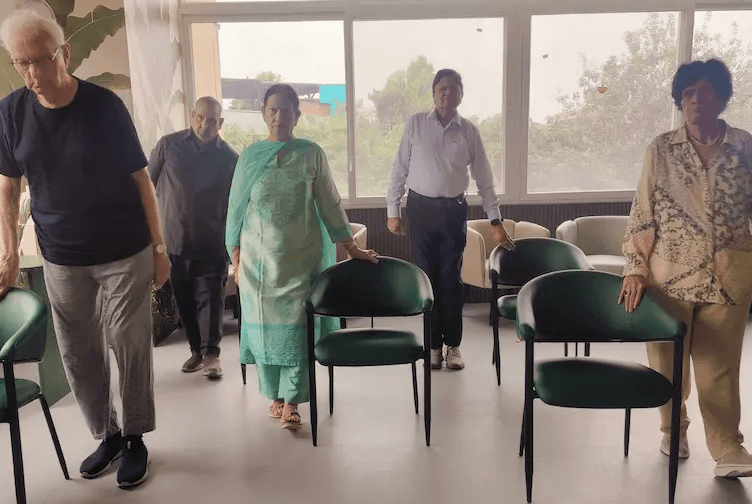
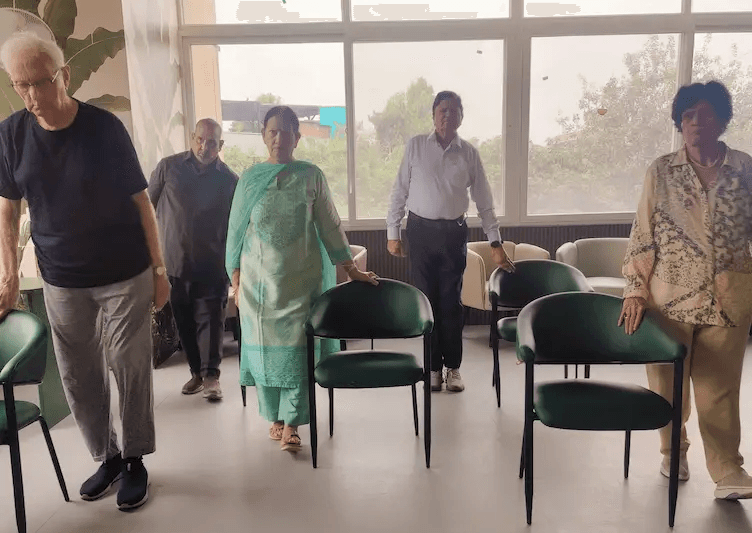
For elderly patients, this does not mean running or high-impact exercise. It means structured, supervised, progressive movement aquatic therapy, chair-based strength training, supervised walking programmes, and resistance exercise targeting the muscle groups surrounding painful joints. The key word is supervised: unsupervised exercise in an elderly patient with chronic pain is less effective and carries injury risk.
Cognitive Behavioural Therapy - the psychological intervention with the strongest evidence base
Cognitive behavioural therapy is a well-established psychological treatment for chronic pain, and has shown particular effectiveness in the elderly when used with multidisciplinary care models.
CBT for chronic pain works by identifying and modifying maladaptive thought patterns catastrophising ("this pain means something is seriously wrong and will only get worse"), pain-related fear avoidance ("if I move, I will damage myself"), and helplessness ("nothing will help") that amplify the central pain experience and sustain the inactivity cycle. CBT-oriented interventions produced small-to-moderate improvements in pain intensity and psychological outcomes, and small improvements in functional impairment in adults.
In Gurgaon's urban elderly population, CBT for chronic pain remains almost entirely unavailable as a standard clinical offering not because it is ineffective, but because the infrastructure to deliver it is absent. Families should be aware that where access to a pain psychologist is possible, this referral is evidence-based, not peripheral.
Structured multimodal programmes combining both
Several non-pharmacological interventions, particularly exercise and cognitive-behavioural therapy, have garnered good evidence of effectiveness as stand-alone, adjunctive treatments for patients with chronic pain. The growing consensus indicates that the best approach involves the combination of pharmacological and non-pharmacological interventions.
The most effective framework for elderly chronic pain management is a structured programme that combines supervised physical rehabilitation, psychological pain management strategies, education about pain neuroscience, and carefully chosen pharmacological support not painkillers used as the sole strategy.
At Aamra Seniors Club, our doctor-led day programme incorporates structured supervised movement, social engagement, and clinical monitoring elements that directly address the inactivity-pain cycle that painkiller-only management leaves unbroken. Book a Day Pass.
Critical Warning: Long-term NSAID use in elderly patients even at standard doses carries serious risks: GI bleeding (which can be silent in older adults on concurrent blood thinners), acute kidney injury, fluid retention worsening heart failure, and elevated cardiovascular event risk. If your parent has been on an NSAID daily for more than four weeks without physician review of renal function, GI protection, and cardiovascular risk, request a medication review urgently. Opioids in elderly patients carry additional risks of falls, constipation, cognitive clouding, and dependence and should only be used under careful specialist supervision for severe pain unresponsive to all other approaches.