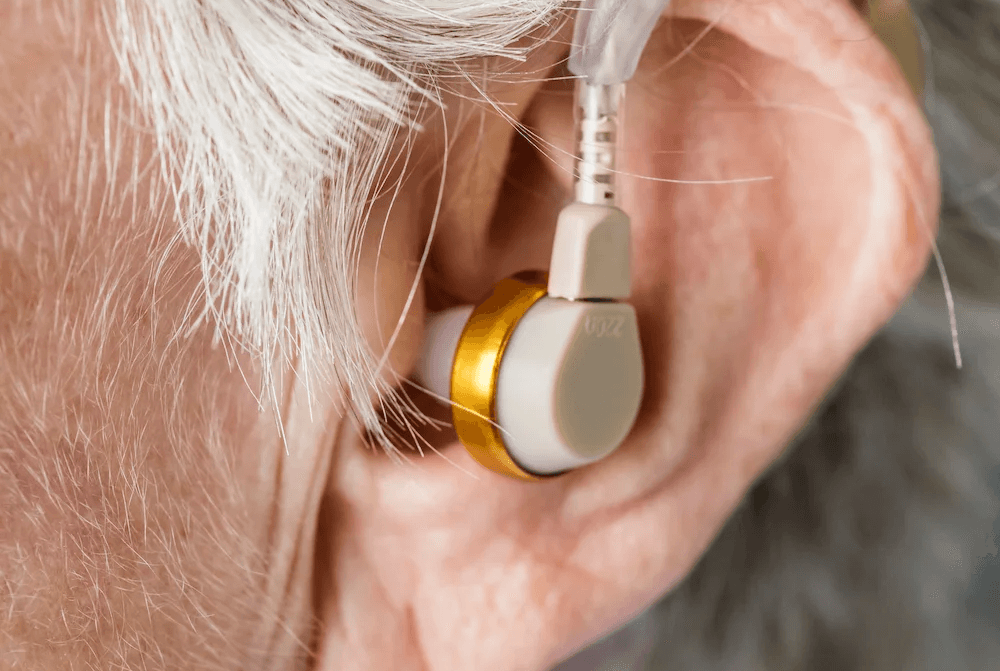
For decades, the path to hearing health was strictly linear: a visit to an ENT specialist, an extensive battery of tests with an audiologist, and a significant financial investment in prescription devices. However, the regulatory landscape changed dramatically with the FDA’s landmark ruling in late 2022, followed by the global 2024–2026 expansion of the Over-the-Counter (OTC) Hearing Aid market.
As a clinician, I see this shift as a double-edged sword. While it democratizes access to technology, it places the burden of clinical diagnosis on the consumer. Relying on research from The Lancet, JAMA Otolaryngology, and The New England Journal of Medicine (NEJM), here is the clinical breakdown of the DIY hearing revolution.
1. The Pro: Removing the Barrier of Entry to Cognitive Health
The most significant benefit of OTC devices is the reduction of the untreated hearing loss period. On average, seniors wait seven to ten years before seeking help for hearing decline.
The Science: A 2023 meta-analysis in The Lancet Healthy Longevity reinforces that hearing loss is the single largest modifiable risk factor for dementia. Untreated hearing loss leads to Cognitive Load, where the brain spends so much energy decoding sound that it has no reserve left for memory and processing. By making devices affordable and available at the local pharmacy, we move from a reactive model to a proactive one.
2. The Con: The Risk of The Missed Diagnosis
The primary danger of the DIY model is not the device itself, but the bypass of the medical professional. Hearing loss is not always a simple case of wear and tear.
The Clinical Risk: Research in JAMA Otolaryngology highlights that perceived hearing loss can be a symptom of underlying medical issues that an OTC box cannot detect. These include:
Acoustic Neuroma: A benign tumor on the vestibular nerve.
Otosclerosis: Abnormal bone growth in the middle ear.
Autoimmune Inner Ear Disease: Rapid decline that requires immediate steroid intervention.
If a consumer simply buys a device to turn up the volume, they may inadvertently mask a life-threatening or reversible medical condition.
3. The Pro: Advancements in Self-Fitting Technology
Modern OTC aids are not the amplifiers of the past. High-end OTC devices now utilize sophisticated Self-Fitting Algorithms.
The Science: A study published in JAMA compared the outcomes of self-fitted OTC devices versus those fitted by audiologists. For adults with mild-to-moderate hearing loss, the results were surprisingly similar in terms of speech-in-noise improvement. The technology has reached a point where Human-in-the-Loop AI can guide a user through a hearing test that is clinically comparable to basic booth testing.
4. The Con: The Vascular and Sensory Blind Spot
Hearing loss is often the canary in the coal mine for vascular health. As we discussed in recent 2025/2026 aging research, the ear is highly sensitive to changes in the Blood-Brain Barrier and vascular stiffening.
The Clinical Reality: According to Nature Aging, sensory decline (hearing and balance) is often linked to the 60-Year Immune Cliff. A prescription-level audit includes a Sensory-Vascular Check that looks at the health of the ear's micro-vasculature. OTC devices focus purely on the output of sound, missing the opportunity to use hearing as a biomarker for cardiovascular aging and frailty.
Summary: The Aamra Clinical Perspective
At Aamra, we view OTC hearing aids as a brilliant first step, but not a final solution.
Feature | OTC Hearing Aids (DIY) | Clinical Prescription (Gold Standard) |
Accessibility | Instant; Buy at the chemist. | Requires ENT/Audiology consult. |
Cost | Low (₹20k - ₹80k). | High (₹1.5L - ₹4L+). |
Diagnostic Depth | None; Assumes simple aging. | Identifies tumors, infections, and vascular risk. |
Fitting | Smartphone-based AI. | Precision mapping for the brain's unique map. |
Indication | Mild-to-Moderate only. | Essential for severe/complex loss. |
My Recommendation
If you or your parent are noticing that the TV is too loud or everyone is mumbling, an OTC device is a great way to start Social Buffering and prevent cognitive decline immediately. However, if the hearing loss is one-sided, accompanied by tinnitus (ringing), or happens suddenly, bypass the pharmacy and see an ENT immediately.
The Verdict: Use the technology for convenience, but use the clinician for longevity. Don't let a DIY approach to your ears lead to a missed approach to your brain health.
When to Visit an ENT Card (The "Red Zone")
If any of these "Red Flags" appear, do not buy an OTC device, see a specialist immediately.
1. Sudden Change
If hearing drops significantly in one or both ears over a period of 72 hours or less, this is a medical emergency (Sudden Sensorineural Hearing Loss).
2. Asymmetry (The One-Sided Rule)
If one ear hears significantly better than the other, or if there is ringing (Tinnitus) only in one ear, it requires a scan to rule out an acoustic neuroma or vascular blockage.
3. Physical Symptoms
Drainage: Any fluid, blood, or pus coming from the ear.
Dizziness: Significant vertigo or balance issues accompanying the hearing loss.
Pain: Any physical ache or pressure in the ear canal.
4. The "Fluctuating" Ear
If your hearing seems to get better and then worse repeatedly, this could indicate Meniere's Disease or an autoimmune inner ear issue that requires prescription steroids, not an OTC amplifier.
FAQs
Is an OTC hearing aid just a cheaper version of a prescription device?
Can I use an OTC device if I have severe hearing loss?
Will an OTC device stop my memory from fading?