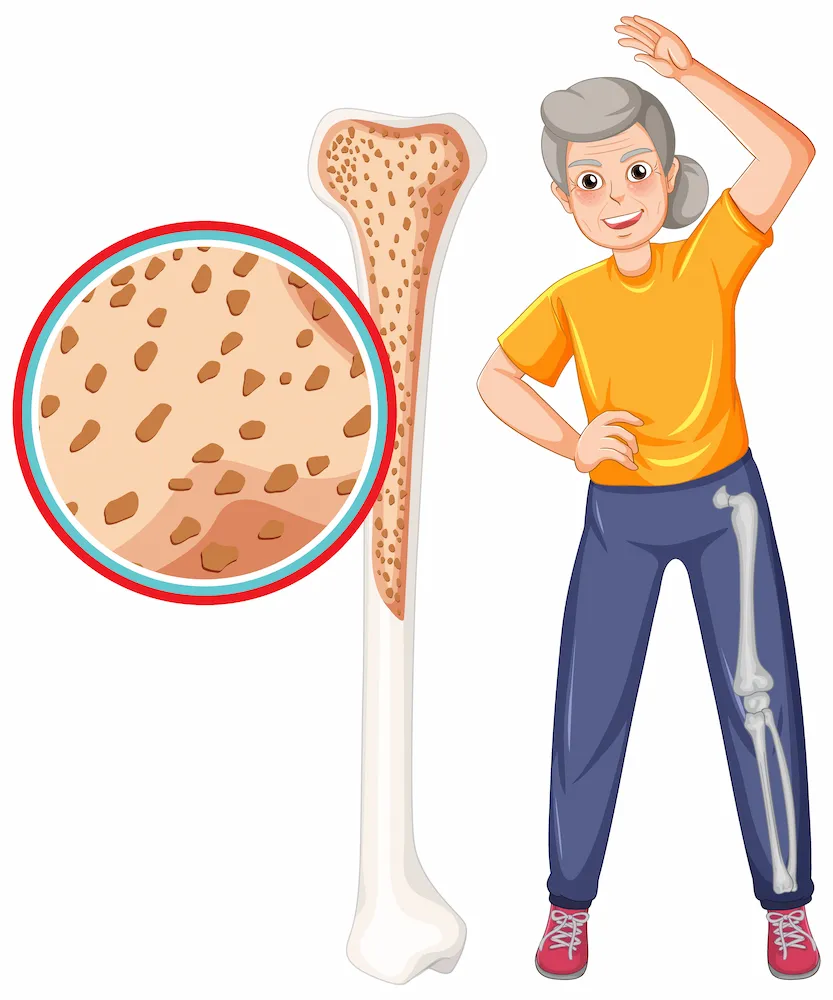
In the medical field a prescription for a senior with thinning bones usually follows a predictable pattern: more calcium and a high-dose Vitamin D supplement. For decades, this has been the frontline defence against osteoporosis. However, as we move into 2026, science has identified a critical flaw in this traditional approach. Calcium is a building block, but without the right architects to direct it, that calcium can end up in the wrong places like your arteries instead of your hips.
To truly manage bone density 60 plus, we must understand the synergistic relationship between Vitamin D3 and Vitamin K2. This duo represents the difference between a body that is calcifying its soft tissues and a body that is actively reinforcing its skeletal frame. As a doctor I view bone health as a dynamic process of "cellular navigation," where we use specific micronutrients to steer minerals exactly where they are needed to maintain independence and prevent the crisis of a hip fracture.
The Calcium paradox: When good minerals go rogue
The biggest risk for a senior taking isolated, high-dose calcium is the "Calcium Paradox." When the body has an abundance of calcium but lacks the signals to deposit it into the bone matrix, the mineral begins to accumulate in the soft tissues. This leads to the calcification of the heart valves and the hardening of the arteries (atherosclerosis).
This is where the distinction between D3 and K2 becomes vital. Vitamin D3 is the doorman it increases the absorption of calcium from your gut into your bloodstream. But once that calcium is in the blood, Vitamin D3’s job is largely over. Without Vitamin K2, that calcium is like a passenger at a railway station with no train to board, it simply lingers until it settles in places that cause cardiovascular harm.
Vitamin K2: The biological traffic controller
Its primary role in bone density 60 plus is to activate two specific proteins: Osteocalcin and Matrix GLA Protein (MGP).
Osteocalcin: This protein acts as a biological magnet. Once activated by Vitamin K2, it binds to the calcium in your blood and pulls it directly into the bone hydroxyapatite (the hard part of the bone).
Matrix GLA Protein (MGP): This is the body’s most powerful inhibitor of soft tissue calcification. It scours your arteries and heart valves, identifying stray calcium deposits and preventing them from hardening.
Research published in Osteoporosis International confirms that seniors who have high levels of Vitamin K2 show significantly lower rates of vertebral fractures and much cleaner arterial profiles. By ensuring your parent has adequate K2, you aren't just protecting their bones; you are protecting their heart.
The mechanical trigger: Why supplements need movement
At Aamra, we often tell our members that "Biology follows Physics." You can provide the body with the perfect ratio of D3 and K2, but the architects need a reason to build. This reason is provided by mechanical tension.
When a senior performs a weight-bearing exercise such as a 30-second chair stand or a brisk walk the pressure on the bone creates a tiny electrical charge known as the Piezoelectric Effect(also seen in Quartz). This charge signals the bone-building cells (osteoblasts) to start working. Vitamin K2 provides the "bricks" (activated osteocalcin), but the exercise provides the blueprint. This is why our vitality sessions are necessary we want the mechanical signal and the nutrient supply to coordinate for better bone health.
Sarcopenia and bone density: The inseparable duo
We cannot discuss bone density 60 plus without discussing muscle mass. In the world of geriatrics, we call this the "Bone-Muscle Unit." Muscles are the primary shock absorbers for the skeletal system. When a senior loses muscle (sarcopenia), every step sends a harsher vibration through the bone, and every stumble is more likely to result in a break.
Vitamin D3 plays a double role here. Beyond calcium absorption, it is essential for the health of Type II fast-twitch muscle fibres the ones used to catch yourself during a trip. A deficiency in D3 leads to muscle weakness, which in turn leads to a lack of pull on the bones, accelerating osteoporosis. By maintaining the D3-K2-Muscle axis, we are building a internal body armour that keeps our members out of the hospital.
Understanding the lagging indicators of bone loss
Osteoporosis is often called a silent thief because it doesn't hurt until a bone breaks. However, there are markers that we track at Aamra to catch decline early:
Height Loss: A loss of even one inch in height is a strong indicator of vertebral compression.
Grip Strength: There is a direct clinical correlation between handgrip strength and hip bone mineral density. If the grip is weakening, the bones are likely thinning.
The TUG Test Time: A slow Timed Up and Go score indicates a lack of coordination and power, making a fall and a subsequent fracture statistically likely.
The nutritional blueprint for seniors
While the medical community is still catching up, the 2026 longevity consensus suggests a specific protocol for bone health in the 60 plus demographic:
Vitamin D3: Ideally maintained between 50-80 ng/mL. This ensures the gut is primed for absorption.
Vitamin K2 (as MK-7): This specific form of K2 stays in the bloodstream longer (up to 72 hours), providing a constant patrol for calcium navigation.
Magnesium: This is the forgotten mineral. Magnesium is required to convert Vitamin D into its active form. Without it, your D3 supplement remains standby.
Plant Diversity: As discussed in our microbiome research, a diverse gut produces small amounts of Vitamin K2 naturally. A beige diet of just wheat and rice starves the body of these natural architects.
The Aamra verdict: Building resilience
At Aamra, we don't believe in accepting the decline. We believe that the skeletal system is a living, breathing tissue that can be reinforced at any age. By moving beyond simple calcium and focusing on the synergistic power of Vitamin K2 and D3, we are helping our members stay healthy for longer.
We are moving from a state of standby to a state of active reinforcement. We ensure that every movement, and every metric is aligned to keep the calcium in the bones and the heart in the green zone.
Visit us at www.aamra.life to learn how we implement the "Bone-Muscle Unit" protocol into our daily senior care. Let's build a future where a birthday is a celebration of strength, not a reminder of fragility.
The Soft Tissue Calcification Danger
If your elderly parent is currently taking high-dose, isolated Calcium supplements (above 1,000 mg/day) without Vitamin K2, especially if they have a history of kidney stones, heart disease, or high blood pressure, consult a clinician immediately. Excess unguided calcium does not simply wash out of the body; it actively binds to cholesterol plaques, hardening the arteries (atherosclerosis) and stiffening heart valves. Never increase calcium intake blindly without ensuring the "biological architects" (D3 and K2) are present to steer the minerals out of the cardiovascular system and into the skeletal framework.
FAQs
Can I just take a regular Calcium and Vitamin D3 tablet from the local pharmacy?
What is the best time of day to take Vitamin D3 and K2 supplements?
Why is my doctor tracking my grip strength if the problem is in my bones?