How Gpld1 rejuvenates the mind
For decades, the benefits of exercise were thought to be compartmentalized. We ran to strengthen our hearts, lifted weights to build our muscles, and performed balance exercises to prevent falls. The brain was seen as a separate entity, a distant command centre that benefited from exercise only indirectly through improved blood flow.
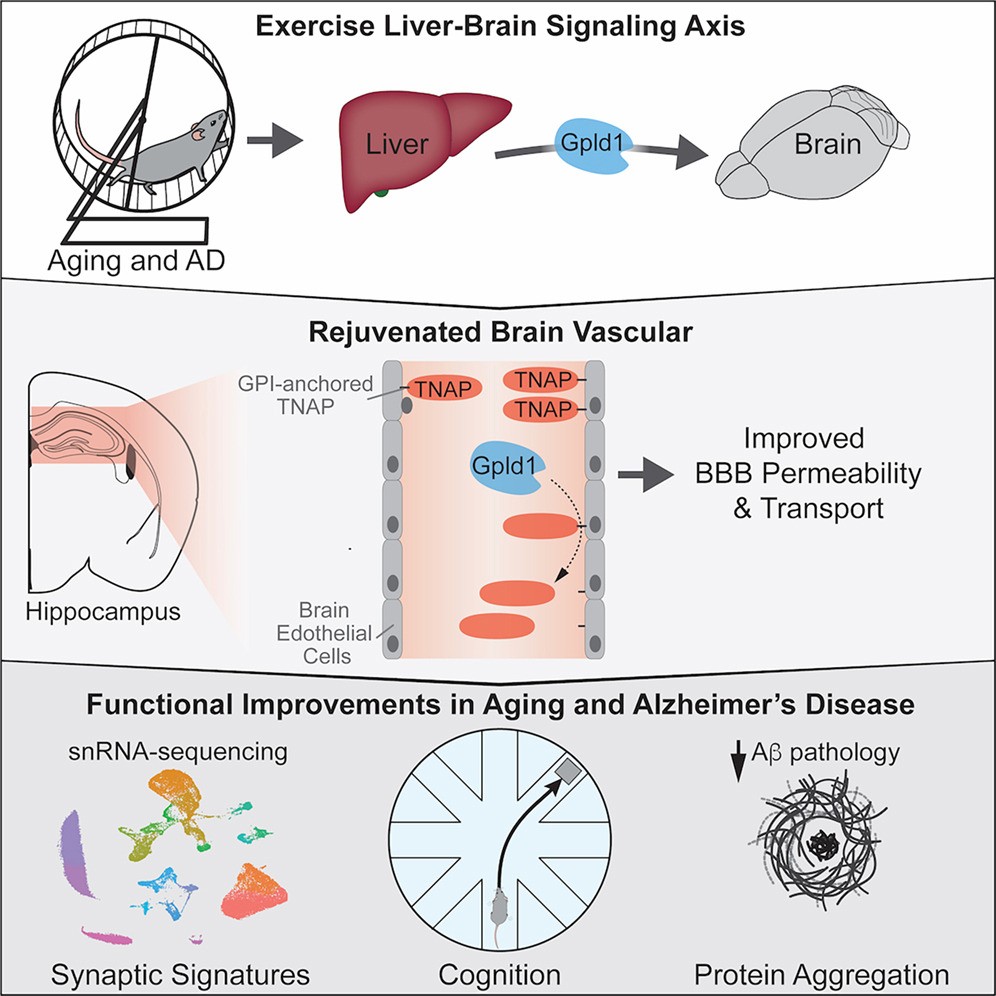
However, a revolutionary discovery in neurobiology has revealed a direct, molecular conversation between our muscles and our minds. This is the muscle-brain axis. At the heart of this connection is a liver-derived enzyme called Gpld1. Recent research published in Cell, suggests that this single molecule may be the fountain of youth for the ageing brain, offering a roadmap for reversing cognitive decline through physical movement.
The discovery: transferring the benefits of exercise
The breakthrough came from a series of parabiosis experiments, a technique where the circulatory systems of two animals are joined. Researchers at the University of California, San Francisco (UCSF), found that when they gave blood from "exercised" aged mice to "sedentary" aged mice, the sedentary mice showed a dramatic improvement in memory and the growth of new neurons in the hippocampus.
The search for the specific exercise factor led to Gpld1 (Glycosylphosphatidylinositol-specific phospholipase D1). This enzyme is produced in the liver, but its production is triggered specifically by muscle activity. When we exercise, our muscles send a signal to the liver to release Gpld1 into the bloodstream.
What makes Gpld1 extraordinary is that it mimics the effects of exercise on the brain, even in a body that remains still. It acts as a molecular messenger that tells the brain to start its own rejuvenation process.
Mechanism of action of Gpld1 on the ageing mind
The ageing brain is often characterized by neuro-inflammation and a slowdown in neurogenesis (the creation of new brain cells). Gpld1 attacks these problems on three distinct fronts:
1. Clearing the biological noise
As we age, our blood carries an increasing amount of biological noise, inflammatory proteins and metabolic waste that can cross the blood-brain barrier and cause cognitive fog. Gpld1 works by cleaving (cutting) specific proteins off the surface of cells in the circulatory system. By cleaning the blood of these pro-inflammatory markers, Gpld1 creates a more hospitable environment for the brain to function.
2. Boosting the hippocampus
The hippocampus is the brain's headquarters for memory and spatial navigation. It is also one of the few areas of the brain capable of producing new neurons throughout life. Research published in Science demonstrated that higher levels of Gpld1 lead to a significant increase in Brain-Derived Neurotrophic Factor (BDNF). BDNF is often described by neuroscientists as "Miracle-Gro" for the brain, as it supports the survival of existing neurons and encourages the growth of new ones.
3. Enhancing synaptic plasticity
Synaptic plasticity is the brain's ability to strengthen the connections between neurons, the physical basis of learning. Gpld1 appears to enhance the electric communication between these synapses. In cognitive tests, aged subjects with high Gpld1 levels performed as well as much younger subjects, effectively reversing the cognitive clock.
The strength connection: why resistance training matters
While any movement is beneficial, the Science and Nature research suggests that the volume of Gpld1 released is tied to the intensity and type of muscle engagement. This brings us to the importance of the 30-second chair stand and handgrip strength.
Clinical studies have long shown a correlation between lower-body power and cognitive health. We now know that this isn't just a coincidence. Large, powerful muscles, like the quadriceps and glutes are the primary "factories" for the signals that trigger Gpld1 release.
When a senior performs a resistance-based movement, they aren't just building a muscle, they are sending a high-voltage signal to the liver to rinse the brain with Gpld1. This is why sarcopenia (age-related muscle loss) is so dangerous, when you lose muscle mass, you lose your brain's primary source of neuro-protective enzymes.
The intensive protocol: How to trigger the axis
To leverage the Gpld1 pathway, the research points toward a specific "dosage" of movement. It is not about marathon running, it is about mechanical tension and metabolic stress.
Resistance is key: Lifting weights, using resistance bands, or performing body-weight exercises (like squats) creates the specific type of muscle "tear" that signals the Muscle-Brain Axis most effectively.
The "slightly breathless" rule: Aerobic activity that increases the heart rate helps the liver circulate Gpld1 through the system more efficiently.
Consistency over intensity: Because Gpld1 has a metabolic "half-life," daily moderate engagement is more effective for cognitive maintenance than a single high-intensity workout once a week.
The future of Gpld1: Exercise in a pill?
The ultimate goal of Gpld1 research is to develop therapeutics for those who cannot exercise, such as those with advanced frailty or paralysis. By isolating the Gpld1 enzyme, scientists hope to eventually "prescribe" the molecular benefits of a 5km run to someone confined to a bed.
However, for the vast majority of adults, the "pill" already exists in the form of movement. The Gpld1 discovery proves that the body is an integrated system.
Conclusion: your legs are the battery for your brain
The discovery of the Muscle-Brain Axis and Gpld1 has changed the "why" of exercise. We no longer exercise just to look better or protect our hearts, we exercise to decontaminate our blood and fertilize our neurons.
Every time you stand up from a chair, go for a brisk walk, or lift a weight, you are activating a biological "cleaning crew" that travels from your liver to your mind. The message from the 2024-2026 longevity research is clear: if you want to keep your mind sharp, you must keep your muscles active. The Muscle-Brain Axis is your greatest internal ally in the fight against cognitive decline.