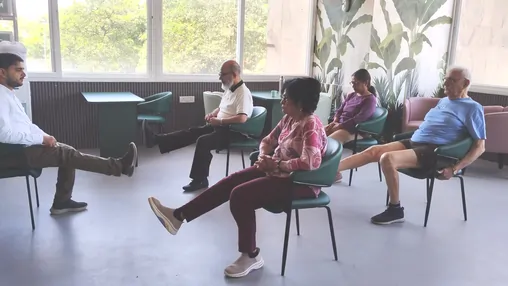
Motion is lotion
In the world of orthopaedics, there is a favourite saying: "motion is lotion." It refers to the way physical movement triggers the release of synovial fluid which is the natural lubricant of joints. But with clinical experience I’ve realised that this "lotion" isn't just for your knees. It’s for your heart, your hormones and most importantly your brain.
For the elderly, losing mobility is often the first domino to fall in a series of health challenges. Here is why keeping the "machine" moving is the ultimate strategy for well-being.
1. Lubricating the joints
As we age, cartilage becomes brittle. If you stop moving because it "hurts a little," the joint becomes stiffer, the muscles around it atrophy and suddenly it hurts a lot.
The "lotion" effect: Low-impact movement like walking or swimming pumps nutrients into the cartilage and flushes out metabolic waste.
Surgeon’s tip: Don't wait for the pain to disappear to start moving. Movement is often the treatment for the pain, not the result of it being gone.
2. Powering the "second heart"
We doctors view the calf muscles as the body’s "second heart."
The circulation boost: Every time you take a step, your leg muscles pump blood back up toward your heart and brain.
Edema and inflammation: Stagnation leads to fluid buildup (edema) and chronic inflammation. Movement acts as a natural drainage system, keeping the "biological pipes" clear and reducing the workload on your cardiovascular system.
3. Brain-derived "miracle-gro"
Perhaps the most exciting connection is between the legs and the library of the mind (the hippocampus).
The BDNF factor: When you engage in weight-bearing movement, your body produces Brain-Derived Neurotrophic Factor (BDNF). In medical circles, we call this "Miracle-Gro for the brain." It helps repair failing brain cells and supports the growth of new ones.
Preventing the fall: In my ENT practice, I see many patients with balance issues. Movement trains the vestibular system (your inner ear's balance centre), making you less likely to suffer the catastrophic falls that lead to orthopaedic emergencies.
4. The hormonal balance (the gynae connection)
For my female patients in their post-menopausal years, "motion" is a critical tool for bone density.
Resistance is key: Walking is great, but adding a little resistance (like light weights or bands) signals to your bones to stay "dense" and strong, protecting you against the fragility that often plagues the elderly.
How to apply "the lotion" (Without a gym membership)
You don't need to be an athlete to reap these benefits. For elder well-being, consistency beats intensity every time:
The "post-meal pivot": A 10-minute walk after lunch stabilises blood sugar and clears the mind.
Sit-to-stand drills: Simply standing up and sitting down from a chair 10 times in a row builds the quadriceps, the most important muscles for maintaining independence.
The balance challenge: While brushing your teeth, try standing on one leg for 15 seconds. This "tunes" the connection between your ears (vestibular system) and your ankles.
A surgeon’s final word
As surgeons we can repair a joint or remove a tumour, but we cannot "prescribe" the vitality that comes from a life in motion. That is a surgery you perform on yourself, every single day, with every step you take.
Your body was designed to move. Don't let the "rust" set in.