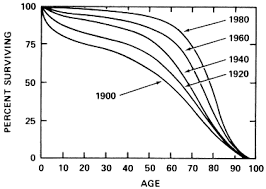
The Fries blueprint for a high vigour life
In 1980, a Stanford physician named James Fries published a paper in the New England Journal of Medicine that proposed something that sounded almost arrogant at the time: that most human illness is not inevitable, merely premature. His data showed that the period of serious disability before death could be compressed into just the final weeks or months of life, if the right interventions began early enough. Forty-five years later, his hypothesis has become one of the most validated frameworks in geriatric medicine.
The Problem Most Families Get Wrong
When a parent is diagnosed with hypertension at 62, or arthritis at 65, or type 2 diabetes at 68, the family's instinct is to manage the disease, adjust the medication, modify the diet, add a follow-up appointment. What almost no one does is step back and ask the more important question: are we managing the disease, or are we managing the trajectory?
There is a profound difference. Managing a disease keeps a person stable. Managing the trajectory determines whether the next ten years are lived with vigour or with progressive dependency.
Most Indian families in high-rise apartments across DLF Phase 1 are doing the former without ever considering the latter. The result is a slow, largely preventable slide from independence to frailty, not because disease was unavoidable, but because the window for primary prevention was missed.
The Science: Physiological Reserve, mTOR, and the Compression Clock
Fries built his framework around the concept of physiological reserve, the surplus capacity that organs carry beyond what is needed for basic survival. In your 20s, your heart, lungs, and kidneys each operate at roughly 20–25% of their maximum functional capacity during daily life. The remaining 75–80% is reserve. As you age, that reserve erodes.
Disability occurs not when an organ fails, but when its reserve falls below the threshold needed to handle the demands of daily life. Death occurs when reserve hits zero. Fries' insight was this: if you can slow the rate at which reserve erodes, you push the disability threshold past the point of natural death, meaning you die with reserve still intact, having never crossed into significant dependency.
Modern molecular biology has filled in the mechanism Fries couldn't fully explain in 1980. The key pathway is mTOR (mechanistic target of rapamycin), a cellular signalling complex that governs growth, repair, and ageing at the cellular level. Chronic inactivity, excess visceral adipose tissue, and sustained inflammation all upregulate mTOR in ways that accelerate tissue senescence and deplete organ reserve faster than chronological age alone would predict.
The Stanford Runners Study which was a longitudinal cohort that Fries himself helped lead confirmed his hypothesis with hard numbers: habitual exercisers postponed disability by 8.7 years compared to sedentary controls, with a significantly compressed period of morbidity at end of life. A 2011 follow-up published in Archives of Internal Medicine showed that active older adults spent 77% less time disabled in the final years of life.
The third mechanism is telomere biology. Telomeres - the protective caps on chromosomes shorten with each cell division, and their rate of shortening is dramatically accelerated by oxidative stress, chronic inflammation, and physical inactivity. A 2017 study in Preventive Medicine found that highly active adults had telomeres biologically equivalent to those of sedentary adults nearly 10 years younger. Telomere length is now considered one of the most reliable biological proxies for physiological reserve.
The Clinical Reality for Seniors in Gurgaon
In the seniors I work with across Gurgaon, I see the compression of morbidity concept play out in two very different ways.
The first group consists of seniors who have maintained some form of structured physical activity morning walks, yoga, stair climbing and who remain socially engaged. When illness does come, it comes late and moves quickly. These seniors often remain functional until their mid-to-late 80s, then decline rapidly over weeks rather than years.
The second group and this is the majority consists of seniors who retired from physical activity when they retired from work, and who have spent the intervening years in a largely sedentary, low-stimulation environment. In these patients, the disability threshold arrives early. By 72 or 74, they are dependent for transport. By 76, they require assistance with daily tasks. The sick years are not compressed they are stretched across a decade.
The difference between these two groups is not genetics. It is reserve management, begun intentionally and maintained consistently.
If you want a clinical assessment of where your parent sits on the physiological reserve curve, book a complimentary experience day at Aamra Seniors Club, DLF Phase 1, Gurgaon.
Red Alert
If a parent over 65 is recovering from minor illness in more than 2 weeks, has recently fallen or near-fallen, or has shown a measurable decline in the ability to manage stairs or carry weight these are signals of depleted physiological reserve, not normal ageing. Do not wait for the next annual check-up. Seek a formal geriatric functional assessment.
Doctor's Note
"When families come to me asking how to help their parents 'age well,' I always redirect the question. The goal isn't to age well it's to stay above the disability threshold for as long as biologically possible, and then to have the curve drop off quickly at the end. James Fries gave us the framework for this in 1980. Our job at Aamra is to operationalise it through structured movement, clinical monitoring, cognitive engagement, and social stimulation, for the specific context of the urban Indian senior. The science is not new. The application to DLF Phase 1 is."