In a landmark clinical review published in the New England Journal of Medicine (June 2025), researchers highlighted a silent crisis in senior care: malnutrition. Unlike the traditional images of malnutrition associated with famine or poverty, geriatric malnutrition is a hidden syndrome. It often hides in plain sight, even in affluent households across Gurugram, where physical appearance may not immediately suggest a nutritional deficit.
The authors argue that malnutrition is not merely a side effect of getting older. Instead, it is a primary geriatric syndrome that should be treated with the same urgency as heart disease or chronic infection. For families, understanding this shift is the key to preserving a parent’s independence.
The anorexia of ageing
One of the most striking findings in the NEJM report is the biological phenomenon known as the anorexia of ageing. As we age, the complex hormonal signals between the gut and the brain undergo a fundamental shift. Seniors often feel full much faster and remain satiated for significantly longer periods than younger adults. When you combine this with a declining sense of taste and smell, the act of eating often becomes a chore rather than a pleasure.
This biological change triggers a dangerous downward spiral. When the body does not receive adequate protein and micronutrients, it begins to cannabilise its own muscle tissue to survive. This results in sarcopenia (the medical term for muscle wasting). The NEJM study confirms that sarcopenia is the leading driver of the falls, fractures, and hospitalisations that rob seniors of their mobility. Essentially, a lack of protein today becomes a broken hip tomorrow.
Beyond the dinner plate
At Aamra Seniors Club, we use the evidence-based findings from this 2025 research to power our CARE Protocol. We understand that addressing malnutrition is not as simple as telling a senior to eat more. It requires a clinical environment that compensates for these biological changes.
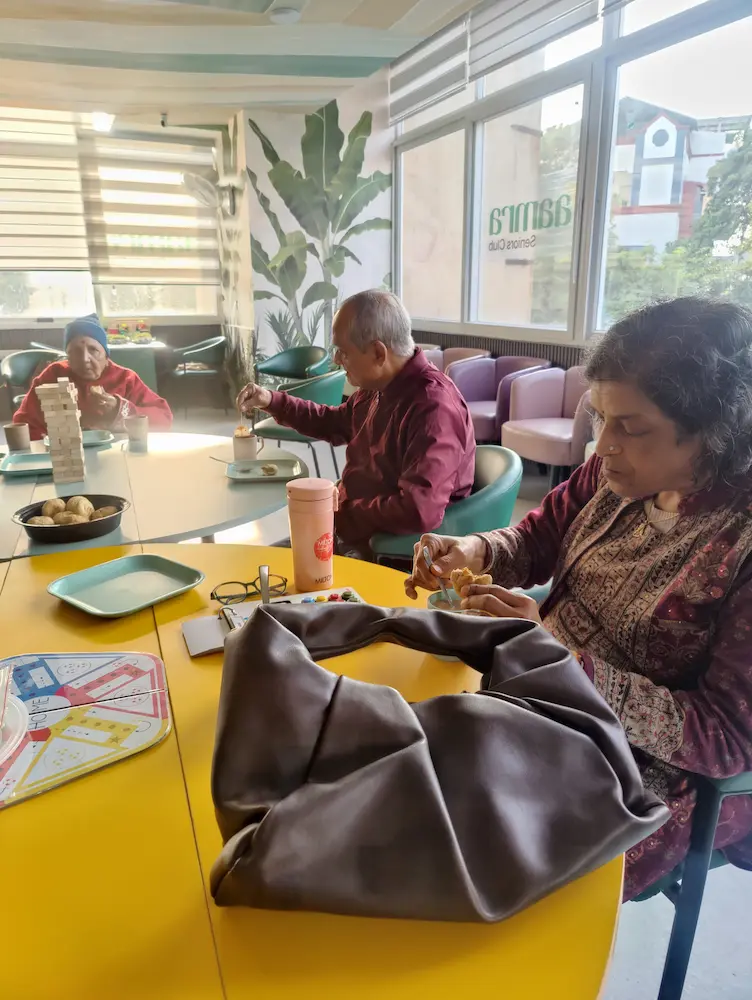
1. Pillar: A - Active Socialisation The NEJM study confirms that loneliness and eating in isolation are major risk factors for malnutrition. When a senior lives alone or eats in a quiet room, their appetite naturally suppresses. Our communal tea hours and group exercise and game sessions at the club serve a medical purpose: they use social engagement to stimulate the brain’s hunger signals.
2. Pillar: E - Early Warning System: Malnutrition is notoriously difficult to diagnose in the early stages because weight loss can be masked by fluid retention or "sarcopenic obesity" (where muscle is replaced by fat). This is why we monitor behavioural biomarkers. If a member suddenly struggles with a jar lid, walks more slowly or shows increased fatigue during our movement sessions, our system flags it as a potential nutritional deficit. By detecting these subtle changes early, we can intervene before the immune cliff is reached.
The bottom line for longevity
Malnutrition is the quiet thief of senior health. It weakens the immune system, slows down cognitive processing and increases the risk of infection. However, as the NEJM research proves, it is also a treatable condition. By focusing on nutrient density, muscle preservation and social engagement, we can stop the spiral of decline. At Aamra, we believe that nutrition is not just food, it is a vital clinical intervention for a longer, stronger life.