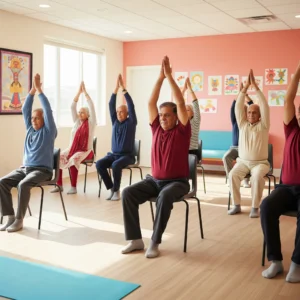
Approximately one in three adults over 65 and half of those over 80 experience at least one fall annually. In India, hip fracture crude incidence above the age of 50 is 129 per 100,000, and the one-year mortality following a hip fracture in patients over 65 ranges from 12% to 35%, depending on comorbidity burden and access to surgical care. A fall in an elderly Indian senior is not a minor incident that requires rest and reassurance. In a significant proportion of cases, it is the clinical event that begins a cascade ending in permanent loss of independence, surgical complication, or death. The fact that most falls are preventable is one of the most actionable findings in geriatric medicine, and most families are not using it.
The Problem Most Families Get Wrong
When families think about fall prevention for a senior parent in Gurgaon, they think about the physical environment: remove the loose rug, install a grab bar, improve the lighting. These are useful measures. But they address the context of a fall, not its cause. A senior who falls in a brightly lit corridor with no obstacles has not been made safe by better lighting. A senior who falls because of orthostatic hypotension from their antihypertensive medication will fall in any environment, regardless of how many grab bars have been fitted.
The most common fall risk factors in elderly Indian seniors are not environmental. They are physiological, pharmacological, and sensory. And because families and even many physicians focus on the environment, the three most clinically significant contributors, namely sarcopenia, polypharmacy, and vestibular or proprioceptive decline, are routinely missed until after the first fall has occurred.
In Gurgaon, where seniors are typically managing multiple chronic conditions and multiple medications, and where high-rise apartment living offers limited opportunity for incidental physical activity, this clinical blind spot is particularly consequential.
Three Biological Pathways That Drive Falls in Elderly Seniors
Pathway 1: Sarcopenia and proprioceptive failure
Sarcopenia, the progressive age-related loss of skeletal muscle mass and function, is one of the most powerful independent predictors of fall risk in older adults. Sarcopenia is defined by the age-related loss of skeletal muscle mass and muscle strength or physical function, and is most common in elderly individuals. Its impact on fall risk extends beyond the obvious reduction in lower limb strength. Sarcopenia causes detrimental effects on lower limb proprioception, the sensory system by which the body perceives its own position in space, which directly impacts postural stability and subsequently increases fall risk.
In practical terms: a senior with significant sarcopenia does not merely have weak legs. They have impaired ability to detect and correct subtle shifts in their centre of gravity before those shifts become falls. The postural correction that a healthy 40-year-old makes unconsciously in a fraction of a second takes a sarcopenic 70-year-old considerably longer, and may not complete before the fall has begun.
Sarcopenia with gait speed as a key measure is associated with fall risk across all thresholds in community-dwelling older adults, with odds ratios for fall risk ranging from 1.7 to 5.6 depending on severity and sex. The exercise and nutritional intervention evidence for sarcopenia management converges on two recommendations: structured resistance training targeting the lower limbs and core, and adequate dietary protein intake of at least 1.0 to 1.2 grams per kilogram of body weight per day.
Pathway 2: Polypharmacy and fall-risk-increasing drugs
This is the most consistently underappreciated fall risk factor in the Indian senior population. At least 42% of elderly patients admitted with femur fractures were found to have been consuming at least one fall-risk-increasing drug (FRID) at the time of their fall, with antihypertensives, analgesics, and benzodiazepines being the most commonly implicated classes. Polypharmacy, defined as the regular concurrent use of five or more medications, is independently linked to a higher risk of mortality, falls, and hospitalisation, with an odds ratio of 2.23 for adverse outcomes.
The specific mechanisms include orthostatic hypotension from antihypertensive medications, where a drop in blood pressure on standing causes dizziness and loss of balance, sedation and impaired coordination from benzodiazepines and some antidepressants, and hypoglycaemia from antidiabetic medications, which can cause sudden weakness and disorientation. A senior on multiple medications for hypertension, diabetes, and pain management is carrying a fall risk that no amount of environmental modification fully neutralises without also reviewing the drug list.
Pathway 3: Vestibular decline and age-related sensory integration failure
The vestibular system, located in the inner ear, is the body's primary organ for balance and spatial orientation. It works in concert with proprioceptive input from muscles and joints and visual input from the eyes to maintain upright posture. With age, vestibular hair cell density reduces, visual acuity declines, and proprioceptive sensitivity diminishes simultaneously. The brain's ability to integrate these three sensory streams and produce accurate postural corrections becomes progressively less reliable.
This is why falls in elderly seniors so frequently occur during transitions: standing up from a chair, turning to walk in a new direction, stepping over a threshold, or reaching for an object while standing. Each of these movements requires rapid, integrated processing of vestibular, visual, and proprioceptive signals. A senior whose sensory integration has degraded will manage well in static, familiar positions and fail precisely at these dynamic transitional moments, which are also the moments when families are least likely to be watching.
The Clinical Reality for Seniors in Gurgaon
The senior population across Gurgaon, presents a specific fall risk profile that I see with considerable consistency. These are seniors managing multiple chronic conditions, typically hypertension, type 2 diabetes, osteoarthritis, and sometimes cardiac conditions, often on five or more medications simultaneously. They live in high-rise apartments where the primary daily activity is walking between rooms. They have no structured strength or balance training programme. And they have typically not had a formal fall risk assessment.
When I conduct the Timed Up and Go test on these seniors, asking them to rise from a chair, walk 10 metres, turn, and return, the proportion who score above the 12-second clinical risk threshold is consistently higher than their families expect. The families have adapted to watching their parent move slowly and cautiously. They have normalised what is actually a clinically significant functional deficit.
The first fall, when it comes, is invariably described by the family as "sudden" and "unexpected." Clinically, it is almost never either.
Practical Steps: A Clinical Fall Prevention Protocol for Gurgaon Families
Step 1: Conduct the Timed Up and Go test at home today
This is a validated clinical screening tool that requires no equipment. Ask your parent to sit in a standard chair with armrests. Time how long it takes them to stand without using their arms if possible, walk 10 metres, turn, and return to the seated position. A time above 12 seconds in a senior under 75 is a clinical red flag for fall risk requiring further assessment. A time above 15 seconds in any senior warrants urgent functional evaluation.
Step 2: Request a medication review with specific attention to FRIDs
Ask the treating physician to specifically review the medication list for fall-risk-increasing drugs. This is not a general "check if medications are okay" conversation. It is a targeted request: which of these medications causes orthostatic hypotension, sedation, or coordination impairment, and can any be reduced, switched, or timed differently? Blood pressure medication taken at bedtime rather than in the morning, for example, may significantly reduce orthostatic hypotension risk on rising.
Step 3: Introduce structured lower limb resistance exercise three times per week
The evidence base for resistance training in fall prevention is robust. Structured lower limb exercises targeting the quadriceps, hip abductors, and calf muscles, performed three times per week with sufficient load to produce mild muscle fatigue, measurably reduce fall incidence in seniors. Specific exercises appropriate for seniors in a home setting include chair squats, calf raises against a wall, and side-lying hip abduction. Each session should last 20 to 30 minutes. This is not gentle stretching. It needs to load the muscle sufficiently to produce adaptation.
Step 4: Check for orthostatic hypotension at home with a blood pressure cuff
Measure your parent's blood pressure twice: once after they have been sitting quietly for five minutes, and again 60 to 90 seconds after they stand. A drop of 20 mmHg or more in systolic pressure, or 10 mmHg or more in diastolic pressure, on standing constitutes orthostatic hypotension and is a clinically significant fall risk that requires medical review. This test takes three minutes and is one of the most useful home screening tools available for medication-related fall risk.
Step 5: Eliminate the environmental hazards as a supplementary, not primary, intervention
Environmental modifications are necessary but insufficient on their own. Clear walking paths of obstacles, secure loose rugs or remove them entirely, ensure bathroom and staircase lighting is bright, install grab bars at the toilet and shower, and ensure your parent wears well-fitting, closed-toe footwear with non-slip soles indoors. These measures reduce the severity of falls and the probability of falling in specific high-risk locations. They do not address the physiological causes that make the fall likely in the first place.
If your parent's fall risk has not been formally assessed, the most important step is a structured clinical evaluation rather than a home audit alone. Book a complimentary experience day at Aamra Seniors Club, DLF Phase 1, Gurgaon.
Red Alert
If your parent has already fallen once in the past 12 months, the probability of a second fall within the same 12-month period is significantly higher than if they had not fallen at all. A single fall is not bad luck. It is a clinical signal that at least one of the three physiological fall risk pathways is active. Do not wait for the second fall. Conduct the Timed Up and Go test, request a medication review, and arrange a formal geriatric fall risk assessment.
Doctor's Note
"In my clinical experience, the conversations that upset me most are the ones that happen after the second fall, not the first. After the first fall, families are frightened but relieved it was not worse. They install a grab bar and consider the matter managed. What they have not done is ask why the fall happened. Was it orthostatic hypotension from the antihypertensive? Was it sarcopenic proprioceptive failure on a transitional movement? Was it vestibular decline during a turn? Each of these has a specific, targeted intervention. But if no one asks the question, no one finds the answer, and the second fall, which is often the more serious one, follows the first with a reliability that is not random and not inevitable. It is the direct consequence of a missed clinical opportunity after fall number one."
Dr. Akanksha Saxena,
ENT Surgeon & Medical Director and Co-Founder, Aamra Seniors Club