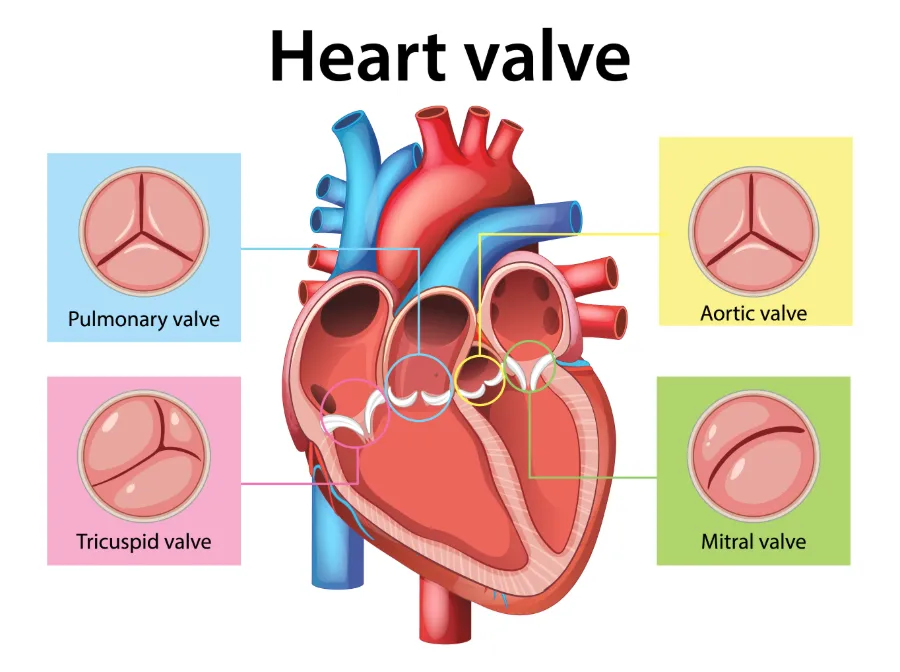
Navigating valvular heart disease in seniors
I often think of the heart as the body's ultimate engine. But even the best engines have valves that can wear out, leak or stiffen over time. The 2024 Lancet Series on Valvular Heart Disease (VHD) highlights a growing challenge: as our global population ages, VHD is becoming an epidemic.
At Aamra, we often see seniors who attribute their shortness of breath to just getting old. Science tells us a different story: it might be a valve and today we have more ways to fix it than ever before.
1. The treatment paradox: high risk, low treatment
The Lancet series identifies a "treatment paradox." Historically, the seniors who needed valve repair the most were often denied surgery because they were considered "too frail" or "too high risk" for open heart procedures.
The proven solution: transcatheter techniques (like TAVI/TAVR). We can now replace or repair heart valves via a small tube in the leg, without ever opening the chest. This has transformed VHD from a surgical no-go to a manageable condition for elders.
Imaging breakthroughs: We no longer guess. Advanced 3D-echocardiography and CT scans allow clinicians to map a patient’s unique anatomy before the procedure even begins.
2. The future: AI and bioengineering
The second part of the Series looks at what is experimental but rapidly approaching:
Digital twins: Scientists are using computational modeling to create a digital twin of a patient's heart to test how a new valve will perform before it is implanted.
Tissue engineering: Research is underway to create heart valves from a patient’s own cells, valves that can grow and repair themselves. This is currently experimental but holds the promise of permanent fixes.
Pharmacology: While we don't have a pill to fix a stiff valve yet new drug strategies are being studied to slow down the calcification (hardening) of heart valves.
3. What is available for the Indian population?
In India, the landscape for heart valve care has shifted dramatically in the last 24 months:
Strategy | Status in India (2026) |
TAVI/TAVR | Proven & widely available. Most Tier 1 hospitals in India perform these regularly. |
MitraClip (Mitral repair) | Available. A non surgical way to fix a leaky mitral valve is now being performed in specialized Indian cardiac centers. |
AI-Imaging support | Proven & available. AI software that helps Indian cardiologists detect early valve disease in routine check ups is increasingly standard. |
Bioengineered valves | Experimental. These are not yet available for general clinical use in India outside of high end research trials. |
4. The Aamra approach: early detection
Early signs of VHD often show up in subtle ways. At Aamra, we look for the "VHD red flags" during our sessions:
The "staircase test": Is a member getting unusually breathless during our light movement sessions?
The fainting spell: Dizziness or near fainting (syncope) can be a sign of a narrowed aortic valve.
The fatigue factor: Sudden, unexplained exhaustion is often the heart's way of saying a valve is struggling.
Take home message
We are at the threshold of a new era. Valvular heart disease is no longer a waiting game for the inevitable. With early detection and the minimally invasive tools now available in India, we can ensure the heart keeps running smoothly for years to come.