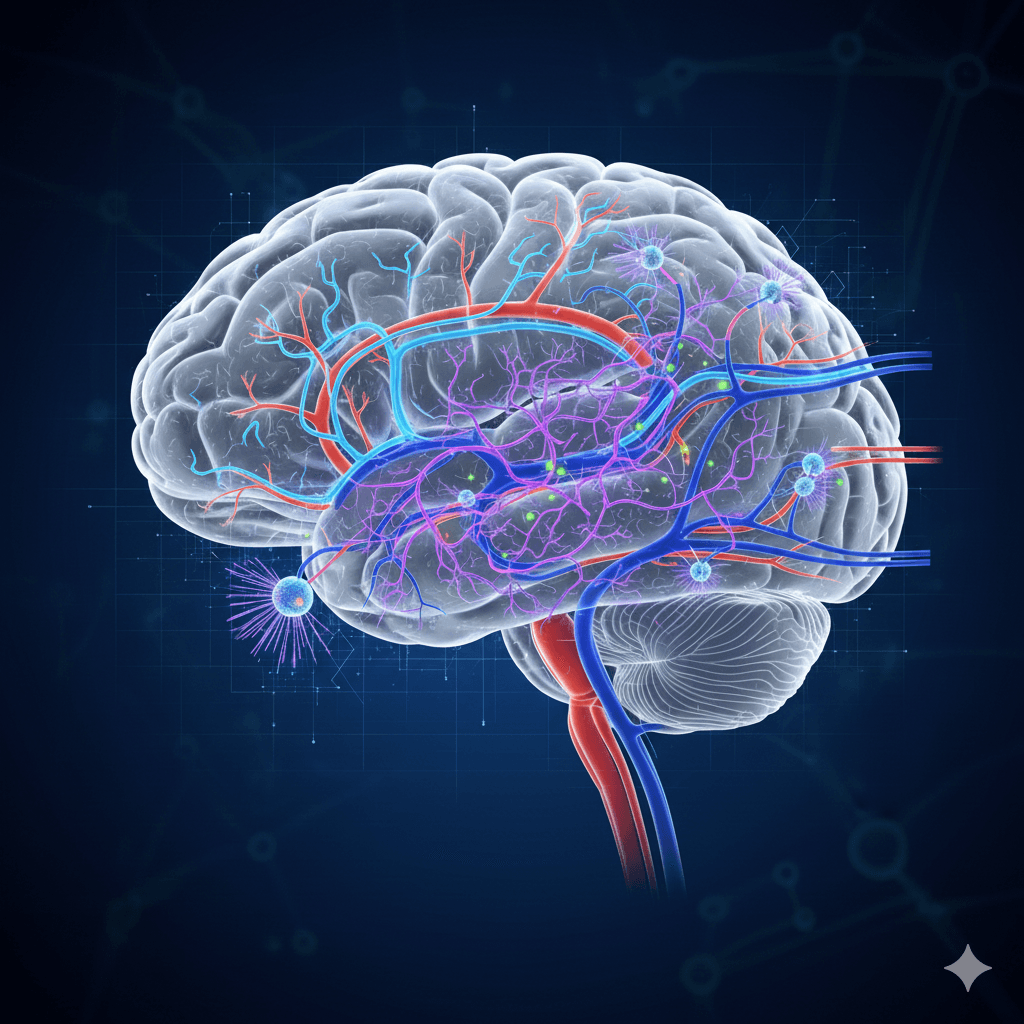
Liquid gold(molecules in blood) that can reverse brain ageing
For a long time, we thought the brain was like a high security vault. It was protected by a "Blood-Brain Barrier" that kept the rest of the body’s problems out. We believed that once the brain started to age or lose cells, there was very little the rest of the body could do to help.
However, recent breakthroughs in longevity science have flipped this script. We’ve discovered that the brain isn't an island; it’s more like a sponge soaking in a "biochemical soup" which is our blood. Scientists have found that certain "rejuvenation molecules" floating in young blood can actually wake up an old brain, repair neural connections, and improve memory.
At Aamra Seniors Club, we track these scientific developments because they prove that longevity isn't just about luck, it’s about managing the chemistry of your body to protect the health of your mind.
The experiment that changed everything: parabiosis
To understand how blood affects the brain, scientists used a method called parabiosis. They linked the circulatory systems of a young mouse and an old mouse so they shared the same blood.
The results were stunning. The older mouse didn't just look healthier, its brain actually started to "de-age". It grew new neurons, its inflammation levels dropped and its memory improved. This proved that ageing isn't just about the brain getting tired, it is about the brain losing access to the "youth factors" that circulate in young blood.
The three "fountain of youth chemicals" in our veins
Researchers have spent the last decade trying to identify exactly which molecules in the blood cause this rejuvenation. Here are the three most promising candidates:
1. GDF11: The regenerator
GDF11 is a protein that is abundant in youth but disappears as we get older. Think of it as a "maintenance signal." In studies published in the journal Science, restoring GDF11 in older subjects led to a massive increase in blood flow to the brain and stimulated the birth of new cells in the hippocampus (the part of the brain responsible for learning and memory).
2. Gpld1: The exercise enzyme
This is perhaps the most exciting discovery for us at Aamra. In 2020, researchers found that after exercise, the liver releases an enzyme called Gpld1 into the blood. When this enzyme reaches the brain, it reduces inflammation and protects against cognitive decline.
The best part? You don't need a transfusion to get this. By staying active through a structured movement protocol, your liver starts producing Gpld1 to keep your brain sharp.
3. TIMP2: The memory builder
TIMP2 is a protein that helps the brain maintain its plasticity that is its ability to form new connections. As we age, our brains can become "stiff" and less able to learn new things. TIMP2 acts like a lubricant for the brain’s synapses, allowing neurons to communicate more effectively.
Why this matters for seniors today
You might be wondering, "Do I need a blood transfusion to stay sharp?" The answer is no. While pharmaceutical companies are working on turning these molecules into medicines, the "CARE Protocol" we use at Aamra focuses on how we can optimize our own internal blood chemistry naturally.
C – Clinical emergency mapping (the delivery system)
All the "liquid gold" molecules in the world won’t help if your blood isn't moving well. We monitor blood pressure and heart health to ensure your "delivery system" is strong enough to pump these rejuvenating factors to your brain’s smallest capillaries.
A – Active socialization (reducing the "ageing soup")
Stress produces a molecule called cortisol. If your blood is constantly full of cortisol, it acts like a toxin for your brain cells. Socializing at the club lowers stress and cleanses your "biochemical soup" of these harmful aging markers.
R – Routine-led wellness (the circadian cleanse)
Did you know your brain has a "trash removal" system called the glymphatic system? It works best when you have a set routine and good sleep. By anchoring your day with a 3-hour session at Aamra, you help your body clear out the "metabolic waste" that causes brain fog.
E – Early warning system (monitoring the change)
We watch for subtle changes in your gait (how you walk) and your mood. Often, a change in how you move is the first sign that the chemistry in your blood or brain is shifting. Detecting this early allows us to adjust your lifestyle before a crisis occurs.
Conclusion
The discovery of blood-borne rejuvenation molecules tells us that the ageing brain is much more plastic than we ever thought. It can be repaired, it can be stimulated, and it can be rejuvenated.
Longevity is a team effort between your heart, your liver, and your brain. By focusing on systemic health you aren't just adding years to your life; you are adding "life" to your blood, and in turn, keeping your brain forever young.
Key takeaways for caregivers and seniors:
Systemic health: What happens in your liver and muscles affects your memory.
Exercise is medicine: Molecules like Gpld1 prove that physical activity is a direct "brain-booster."
The future: We are moving toward a world where "brain aging" might be treated by fixing the blood.