Most Indian families caring for a senior parent assume that smaller portions and lighter meals are healthier choices for an older body. The clinical evidence says the opposite. After 60, the ageing body requires more protein per kilogram of body weight than a 30-year-old, not less. It also absorbs it less efficiently. A senior eating what appears to be a reasonable vegetarian Indian diet may be in a state of chronic protein deficiency without anyone realising it, a deficiency that silently accelerates muscle loss, weakens immunity, and measurably increases the risk of falls, fractures, and cognitive decline.
The Problem Most Families Get Wrong
The dominant assumption in urban Indian households is that senior nutrition means reducing: less oil, less salt, less sugar, smaller portions. These are not wrong instructions, but they are incomplete ones, and in practice they produce a calorie-reduced diet that is also severely protein-reduced.
In a traditional Indian vegetarian diet, the primary protein sources are dal, curd, and paneer. For a 65-year-old weighing 60 kg, the evidence-based protein requirement is between 1.0 and 1.2 grams per kilogram of body weight per day, which translates to 60 to 72 grams of protein daily. A typical Indian vegetarian meal plan, with one bowl of dal at lunch and curd at dinner, delivers approximately 25 to 35 grams. The gap between requirement and actual intake is not marginal. It is a daily deficit of 30 to 40 grams that compounds over months and years into a clinically significant nutritional crisis.
Families in Gurgaon, often add to this problem inadvertently. When a parent reports reduced appetite, the instinct is to prepare lighter, more easily digestible food: khichdi, soups, soft rotis. These are lower in protein still. The kindness intended by the softer diet is, metabolically, accelerating the very decline the family is trying to prevent.
The Science: Three Nutritional Mechanisms That Drive Ageing After 60
Mechanism 1: Anabolic resistance and the protein absorption problem
After 60, skeletal muscle develops what researchers call anabolic resistance: a reduced sensitivity to the muscle-building signal of dietary protein. In a 30-year-old, 20 grams of high-quality protein at a single meal is sufficient to maximally stimulate muscle protein synthesis. In a 70-year-old, the same 20 grams may produce a significantly blunted response. The muscle simply does not respond to the protein signal as efficiently as it once did.
Research shows that higher dietary protein of up to 1.2 grams per kilogram of body weight per day may help prevent sarcopenia and maintain musculoskeletal health in older individuals, though achieving these levels is challenging for older adults with declining appetites. The European PROT-AGE Study Group, whose recommendations are widely cited in geriatric nutrition literature, advises 1.0 to 1.2 grams per kilogram per day for healthy older adults and 1.2 to 1.5 grams per kilogram for those with acute or chronic illness. The current standard Indian dietary recommendation of 0.8 grams per kilogram, which most seniors are not even meeting, is considered clinically inadequate by these standards.
Mechanism 2: Vitamin D deficiency and the cognition connection
India receives abundant sunlight, and yet Vitamin D deficiency is paradoxically prevalent among urban Indian seniors. High-rise apartment living, reduced outdoor mobility, sun-avoidance habits, and age-related reduction in the skin's capacity to synthesise Vitamin D from sunlight all contribute. A longitudinal study of 982 cognitively healthy adults above 45 years from urban Bangalore found that 58% were Vitamin D deficient and 23% were insufficient, leaving only 19% with normal levels.
The consequences extend beyond bone health. Vitamin D deficiency is an independent risk factor for accelerated decline in global cognition and executive function in individuals aged 50 or older, with deficient individuals showing measurably faster cognitive deterioration over a six-year follow-up period. For a senior already at risk for cognitive change, an undetected and uncorrected Vitamin D deficiency is an avoidable contributor to that risk.
Mechanism 3: Dehydration and the thirst deficit
The sensation of thirst diminishes significantly with age. This is not a subjective impression; it is a well-documented physiological change in the hypothalamic osmoreceptors that regulate fluid balance. A 70-year-old may be clinically dehydrated while experiencing no subjective sense of thirst whatsoever. Chronic low-grade dehydration in seniors produces a consistent cluster of effects: reduced cognitive clarity, increased fall risk, constipation, urinary tract infections, and worsening of existing cardiac and renal conditions. In the hot climate of Gurgaon, particularly during summer months, this risk is compounded significantly.
The Clinical Reality for Seniors in Gurgaon
In my clinical work with seniors in DLF Phase 1, I see three nutritional patterns that repeat consistently and that families almost never identify on their own.
The first is the protein gap described above: a senior eating three meals a day, appearing to eat reasonably well, but consuming less than half their protein requirement because the diet has gradually shifted toward carbohydrates as appetite and cooking capacity have declined.
The second is undetected micronutrient deficiency, particularly Vitamin D, Vitamin B12, and iron. These deficiencies are clinically invisible until they are tested for. B12 deficiency, extremely common in elderly vegetarians, mimics the early signs of dementia: memory lapses, confusion, reduced processing speed. It is routinely missed for months or years because the family assumes the cognitive change is age-related rather than nutritional.
The third is inadequate hydration dressed up as dietary discipline. Many seniors in this demographic have been told for years to reduce fluid intake because of mild cardiac or renal conditions. In the absence of specific clinical guidance tailored to their current status, they under-drink chronically, and no one connects the resulting cognitive cloudiness or recurrent UTIs to fluid insufficiency.
Practical Steps: A Clinically Grounded Nutrition Audit for Families
Step 1: Calculate your parent's actual daily protein intake
Do this for one representative day: add up the protein grams from every food consumed. One bowl of cooked dal provides approximately 8 to 9 grams. One cup of curd provides 5 to 6 grams. One egg provides 6 grams. One 100-gram piece of paneer provides approximately 18 grams. Then compare the total against the target of 1.0 to 1.2 grams per kilogram of body weight. Most families who do this exercise for the first time are surprised by how large the gap is.
Step 2: Add a protein-dense food to every meal, not just one
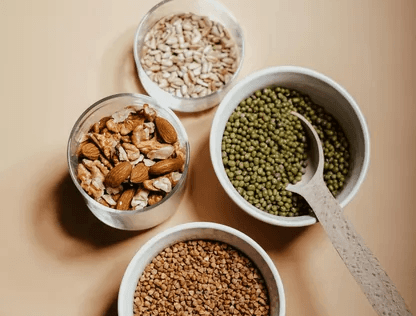
Rather than relying on one high-protein meal, distribute protein across all three meals and, where appetite allows, a mid-morning or mid-afternoon snack. Practical additions for a vegetarian Indian diet include: a handful of roasted peanuts or mixed seeds, a small bowl of curd with lunch, an extra katori of dal at dinner, or a glass of milk at bedtime. Each of these additions delivers 5 to 10 additional grams without requiring major dietary restructuring.
Step 3: Request a micronutrient panel, not just a routine blood count
A standard blood test ordered by a general physician will typically check haemoglobin, blood glucose, and kidney and liver function. It will not automatically check Vitamin D, Vitamin B12, folate, or ferritin unless specifically requested. Ask for these explicitly. If a senior has not had a full micronutrient panel in the past 12 months, assume that deficiencies are present until proven otherwise, because the probability in this demographic is high.
Step 4: Implement a structured fluid schedule, not just reminders to drink
Since thirst is an unreliable signal, replace it with a schedule. A glass of water with each meal, a glass mid-morning, and a glass mid-afternoon provides approximately 1 to 1.2 litres from water alone, which is a reasonable minimum. Herbal teas, diluted lassi, coconut water, and clear soups all count toward this total. Set phone reminders for the senior or their carer if needed. Do not rely on their reporting that they "drink enough."
Step 5: Re-evaluate soft food substitutions clinically
If a parent has shifted to khichdi, soups, and soft rotis because of reduced appetite, dental problems, or swallowing difficulty, these are valid adaptations. But the nutritional adequacy of the soft diet must be assessed, not assumed. Fortified khichdi with added dal, curd, and a boiled egg is nutritionally adequate. Plain khichdi with a thin soup is not. The texture of the food is a cooking decision. The nutritional content of the diet is a clinical one.
If your parent has lost more than 2 to 3 kg of body weight in the past three months without a deliberate dietary intervention, or if they seem confused or mentally slower than usual, do not attribute this to ageing without first ruling out B12 deficiency, Vitamin D deficiency, and protein-energy malnutrition. These are treatable, reversible conditions that are routinely mistaken for irreversible cognitive and physical decline in elderly patients.