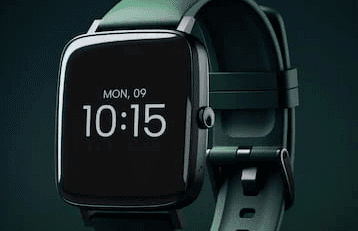
Atrial fibrillation is the most common cardiac arrhythmia in adults over 65, affecting an estimated 10 to 15% of the population in this age group. It is also frequently silent: many seniors with AFib experience no palpitations, no chest pain, and no obvious symptoms. Their first clinical presentation is a stroke. A single-lead ECG built into a consumer smartwatch can now detect AFib with a sensitivity exceeding 97% in validated studies, turning a device most people think of as a step counter into a genuine early warning system. But only if the user understands what it can and cannot do.
The Problem Most Families Get Wrong
When a senior parent in Gurgaon wears a smartwatch, the family typically interprets a "Normal Sinus Rhythm" reading as comprehensive cardiac clearance. It is not. When the same watch shows "AFib Detected," the family often panics and rushes to a cardiologist with a screenshot. That response, while understandable, is also incomplete.
The problem is a fundamental misunderstanding of what a single-lead wrist ECG is actually measuring, what it is designed to detect, and equally importantly, what it is not designed to detect. Without this clinical framework, the watch produces either false reassurance or unnecessary alarm, and neither serves the patient.
In Gurgaon, where many seniors live independently or with limited daytime supervision while their adult children are at work, the ability to use cardiac wearables correctly is not a tech-enthusiast interest. It is a practical safety tool. Used well, it adds a meaningful layer of monitoring. Used poorly, it creates anxiety without clinical value.
The Science: What a Smartwatch ECG Actually Measures
What a 12-lead hospital ECG does
A traditional hospital ECG uses 12 electrodes placed across the chest, arms, and legs to examine the electrical activity of the heart from 12 different angles simultaneously. This gives a cardiologist a comprehensive map of how electrical impulses travel through every region of the cardiac muscle, making it capable of detecting arrhythmias, ischaemia (reduced blood flow to heart muscle), conduction abnormalities, and evidence of previous myocardial infarction.
What a smartwatch ECG does
A smartwatch ECG is a single-lead ECG. When the user places a finger on the watch's crown or back sensor, they complete an electrical circuit through the chest between the wrist and the finger, creating a recording equivalent to Lead I of a standard ECG. This single lead captures the overall rhythm of the heart reliably enough to detect whether the rhythm is regular or irregular, and specifically whether it shows the characteristic chaotic pattern of atrial fibrillation.
What it cannot do: a single-lead wrist ECG cannot examine the heart from the multiple angles needed to detect myocardial ischaemia or a heart attack in progress. A normal smartwatch ECG reading during chest pain does not rule out a cardiac event. This distinction is clinically critical and widely misunderstood.
The AFib detection mechanism
Atrial fibrillation produces a characteristic pattern of irregular R-R intervals (the gaps between heartbeats) and the absence of distinct P-waves (the signal that the atria are beating in an organised rhythm). The algorithms embedded in medical-grade smartwatches are trained on hundreds of thousands of ECG recordings to identify this pattern. Published validation studies show sensitivity rates of 93 to 98% for AFib detection in these devices, which is clinically meaningful. A 2023 study in The Lancet Digital Health confirmed that single-lead smartwatch ECGs perform comparably to cardiologist-read telemetry for AFib detection in ambulatory patients.
Passive versus active monitoring
Most medical-grade smartwatches offer two distinct monitoring modes. Active monitoring requires the user to initiate a 30-second ECG by placing their finger on the sensor. Passive monitoring uses the optical photoplethysmography (PPG) sensor on the back of the watch to continuously sample heart rhythm throughout the day and alert the user if an irregular rhythm is detected. The passive mode is less precise but more valuable for detecting paroxysmal AFib, which comes and goes and may not coincide with the moments when a senior chooses to take an active reading.
The Clinical Reality for Seniors in Gurgaon
Cardiac monitoring is particularly relevant for Gurgaon's senior population for several reasons. Urban Indian seniors carry a high burden of hypertension, diabetes, and metabolic syndrome, all of which are independent risk factors for developing atrial fibrillation. Many seniors in DLF Phase 1 and Sector 26 are on medications including antihypertensives, diuretics, and thyroid medications, some of which can affect cardiac rhythm and warrant monitoring.
Equally relevant is the supervision gap. A senior who lives alone or with domestic help during daytime hours has no clinical observer during the hours when a cardiac event is most likely to occur. A smartwatch that can passively monitor rhythm and send an alert when something is irregular fills a genuine clinical gap that a quarterly doctor's visit cannot address.
However, I want to be specific about what "clinical-grade" means in the context of Indian market devices. Not all smartwatches with ECG features carry regulatory approval. For India specifically, the relevant regulatory body is the Central Drugs Standard Control Organisation (CDSCO). The CDSCO-cleared or FDA-approved devices currently validated for ECG use in India include the Apple Watch Series 4 and above, the Samsung Galaxy Watch 6, the Garmin Venu 2 Plus, and the KardiaMobile standalone device. (Please note: device approvals are updated periodically. Confirm current CDSCO status before recommending any specific device to a patient.)
The KardiaMobile deserves special mention for seniors who are resistant to smartwatches. It is a small, credit-card-sized device that produces a clinical-grade single-lead ECG in 30 seconds when held between two thumbs. It connects to a smartphone app, stores readings, and can generate a PDF that can be emailed directly to a cardiologist. It costs significantly less than a smartwatch and produces a reading that cardiologists find more immediately interpretable than a watch-generated trace.
Practical Steps: How to Use a Smartwatch ECG Correctly
Step 1: Understand the device's specific approvals before purchase
Before buying any wearable for cardiac monitoring purposes, confirm that it holds CDSCO clearance for ECG use in India, not just FDA approval in the US. Approval in one jurisdiction does not automatically confer approval in another. Your cardiologist or the device manufacturer's Indian distributor can confirm the current approval status.
Step 2: Take active ECG readings correctly for a usable trace
Sit with both arms resting on a flat surface. Be completely still. If the skin is very dry, which is common during Gurgaon winters, place a small amount of water or unscented moisturiser on the fingertip before placing it on the sensor. Allow the full 30-second recording to complete without movement. A partial or motion-artefact reading is clinically unusable.
Step 3: Understand the two-track response protocol
If the watch shows "AFib Detected" and the senior feels fine: do not panic. Sit still and take one repeat reading after five minutes. If the AFib reading repeats, send the PDF export to the treating cardiologist and book an appointment. Do not go to an emergency room for an asymptomatic single reading. If the watch shows "Normal Sinus Rhythm" but the senior feels dizzy, breathless, or has chest discomfort: disregard the watch entirely and seek immediate medical attention. A normal watch reading never overrides symptoms.
Step 4: Enable passive monitoring and set appropriate alert thresholds
Turn on continuous heart rhythm monitoring in the watch settings. Set high heart rate alerts at 100 beats per minute at rest and low heart rate alerts at 50 beats per minute. These thresholds are broadly appropriate for most seniors but should be confirmed with the treating cardiologist for individuals on rate-controlling medications such as beta-blockers, which routinely produce heart rates below 60 at rest.
Step 5: Share watch data with the treating physician at every appointment
Most medical-grade smartwatch apps allow export of ECG history as a PDF or CSV. Bring this to every cardiology or physician appointment. A 30-day history of rhythm readings provides clinical context that a single in-clinic ECG taken on one day cannot. This is one of the most underused features of these devices.
Two features marketed on smartwatches in India are not clinically validated and should not be used for medical decisions. Wrist-based blood pressure monitoring on smartwatches is not accurate enough to replace a cuff-based sphygmomanometer. Non-invasive blood glucose monitoring without a needle does not exist in any currently approved consumer device. Any watch claiming to measure blood sugar through the skin is not a medical device. Do not adjust medications or make clinical decisions based on these readings.