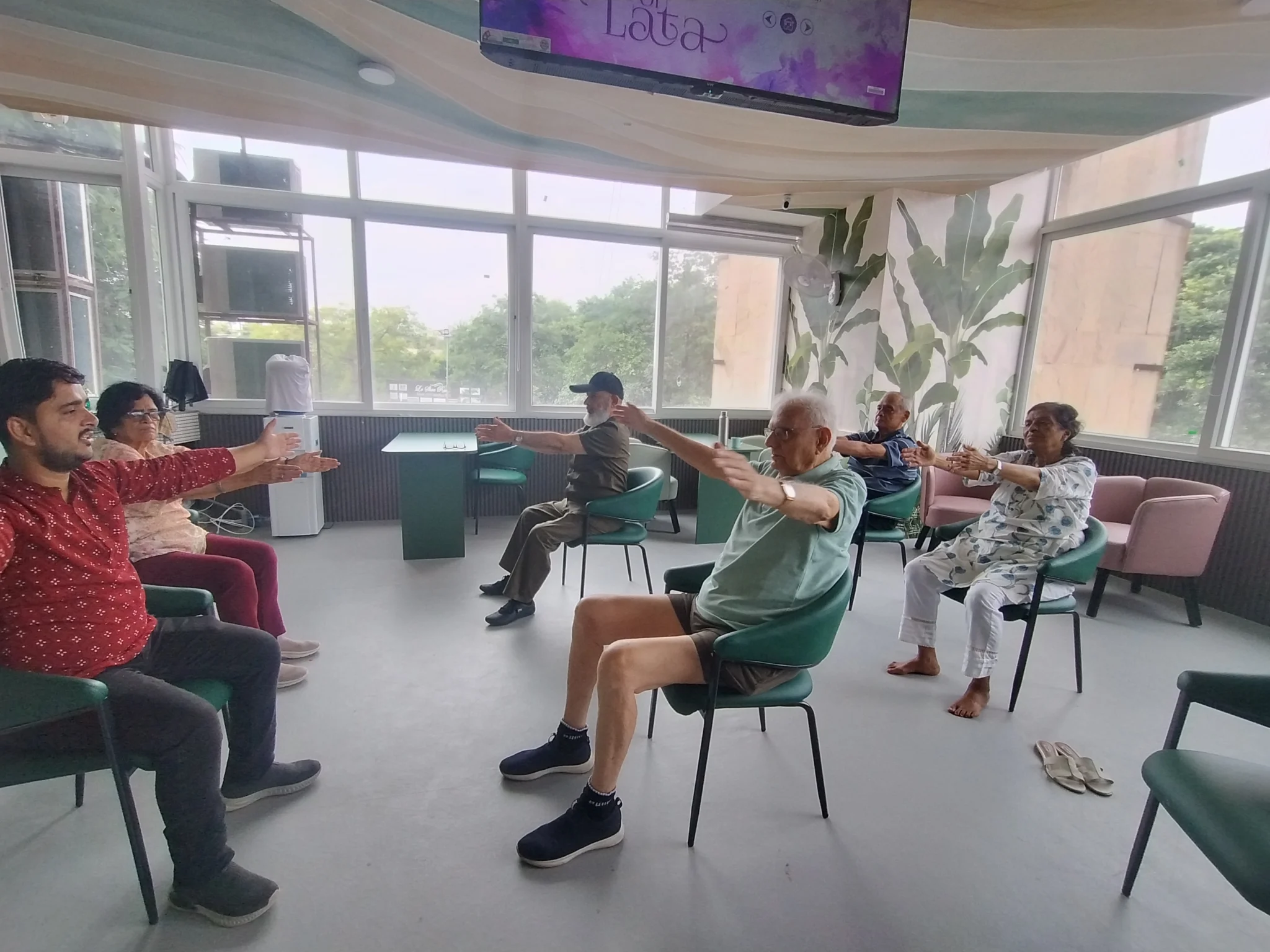
Social isolation in seniors is not a lifestyle inconvenience, it is a biological accelerant. A landmark meta-analysis published in PLOS Medicine found that inadequate social connection increases the risk of premature mortality by 29%, a magnitude comparable to smoking 15 cigarettes a day. For seniors in Gurgaon's high-rise apartments, where a lift ride can be the only human contact of the day, this is not a statistic to scroll past.
The Problem Most Families Get Wrong
When adult children in Gurgaon think about their parents' health, they typically focus on medications, diet, and doctor visits. What they consistently underestimate is the biological cost of an unstructured, solitary day.
Retirement removes two of the most powerful regulators of human neurobiology: predictable time structure and obligatory social contact. When both disappear simultaneously as they do for most seniors in DLF Phase 1 who have moved here to be near their children, only to find those children at work by 9 AM, the brain and body begin to respond in measurable, damaging ways.
This is not about loneliness as an emotion. This is about loneliness as a physiological state.
The Science: What Isolation Actually Does to the Brain and Body
When a senior goes through a day with minimal social interaction and no structured activity, two key biological cascades are triggered:
1. Elevated cortisol and HPA axis dysregulation Chronic loneliness activates the hypothalamic-pituitary-adrenal (HPA) axis, driving sustained elevation of cortisol. Over weeks and months, this suppresses hippocampal neurogenesis, the very process responsible for forming new memories. A 2019 study in Nature Neuroscience demonstrated that chronic social isolation reduces hippocampal volume in older adults, a finding previously associated only with major depressive disorder.
2. Suppressed BDNF and accelerated cognitive decline Brain-Derived Neurotrophic Factor (BDNF) the protein responsible for maintaining existing neural connections and building new ones, is acutely sensitive to social stimulation. Meaningful conversation, shared laughter, and collaborative activity all trigger BDNF release. Isolation, by contrast, has been shown to reduce circulating BDNF levels by up to 30% in older adults, according to research published in Translational Psychiatry (2020).
3. Elevated IL-6 and systemic inflammation The immune system reads loneliness as a threat signal. In isolated seniors, interleukin-6 (IL-6), a pro-inflammatory cytokine, rises significantly. Elevated IL-6 is independently associated with accelerated cognitive decline, increased cardiovascular risk, and reduced immune competence all compounded in the post-60 body.
Routine, conversely, is a stabilising force on all three of these pathways. When the brain knows what comes next, cortisol regulation improves, sleep architecture stabilises, and the cognitive load of navigating an unstructured day is reduced.
The Clinical Reality for Seniors in Gurgaon
In my clinical work with seniors, I see a recurring pattern: a senior who was professionally active and socially embedded for 35 years suddenly retires to a 3BHK apartment in Gurgaon. Their children are nearby but unavailable. The building has a gym they don't use. The colony has a park they visit twice a week.
By month six, the pattern is predictable: disrupted sleep, reduced appetite, mild cognitive slowing, and what families describe as "just seeming a bit off." These are not the early signs of dementia. They are the early signs of cortisol-driven hippocampal stress in the absence of structure and social stimulation.
The fix is not medication. It is the deliberate re-engineering of daily routine and social contact, with clinical oversight to ensure the interventions are appropriate for the individual's physical and cognitive baseline.
If you recognise these patterns in your parent's daily life, the first step is a structured, clinical assessment — not a weekend visit. Book a complimentary experience day at Aamra Seniors Club, DLF Phase 1, Gurgaon.
If your parent has withdrawn from activities they previously enjoyed, is sleeping more than 10 hours daily, or has shown a noticeable change in appetite or personal hygiene over 2–4 weeks, this is not "normal ageing." These are clinical signs of depressive withdrawal that require formal assessment, not reassurance.