Social buffering: The molecular antidote to "inflammaging"
In the world of longevity science, a new term has taken centre stage: "inflammaging." This refers to the chronic, low-grade, systemic inflammation that develops as we age. Unlike the sharp pain of a stubbed toe, inflammaging is a silent fire that smoulders in the background, driving nearly every age-related disease from Alzheimer’s and cardiovascular decay to type 2 diabetes.
While diet and exercise are the traditional "fire extinguishers," ground breaking research has identified a surprising molecular antidote: Social Buffering.
The study: Loneliness as a pro-inflammatory state
The scientific consensus is moving toward a startling conclusion: Loneliness isn't just a feeling, it’s a pro-inflammatory state. Extensive research, including meta-analyses in JAMA Psychiatry, reveals that social isolation triggers the body's "fight-or-flight" response. When a senior feels chronically isolated, the brain perceives this as a threat to survival. This perception signals the bone marrow to overproduce pro-inflammatory monocytes.
At the cellular level, this increases levels of Interleukin-6 (IL-6) and C-Reactive Protein (CRP) the primary biomarkers of inflammaging. Essentially, being alone tells your immune system to prepare for an injury that never comes, causing it to attack its own healthy tissues instead.
Social buffering: The cooling system for the body
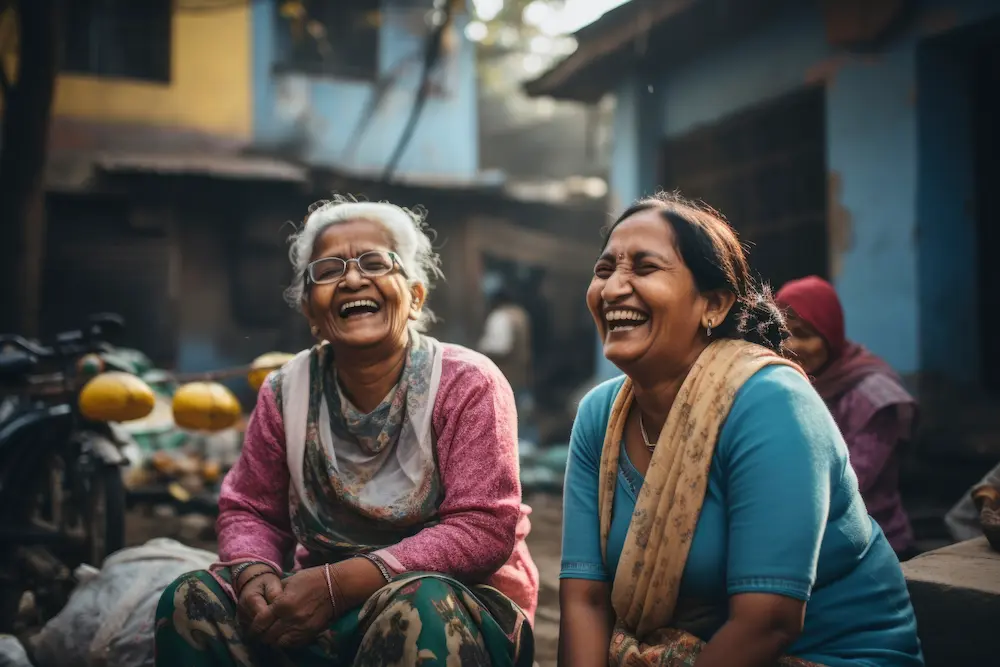
If isolation is the fuel for inflammaging, Social buffering is the cooling system. This biological phenomenon occurs when high-quality social interactions signal the brain to down-regulate the stress response.
Research indicates that peer-led engagement and meaningful social connection can:
Lower IL-6 levels: Direct social interaction has been shown to suppress the production of inflammatory cytokines.
Increase oxytocin: Often called the "cuddle hormone," oxytocin has potent anti-inflammatory properties that protect the lining of the heart and blood vessels.
Buffer cortisol: Social support lowers the baseline level of cortisol, preventing the "molecular wear and tear" that leads to frailty.
The Aamra angle: Socialisation as a clinical intervention
At Aamra Seniors Club, we don't view socialising as a "nice-to-have" activity; we treat active socialisation (Pillar A) as a core clinical intervention.
Our peer-led engagement model is designed to maximize "social buffering." By creating an environment where seniors are not just attendees, but active contributors to a social circle, we trigger the biological pathways that lower systemic inflammation. When our members engage in a heated debate, a group game, or a shared meal, they aren't just passing time, they are administering a molecular dose of anti-inflammatory medicine.
The inflammaging checklist
Is your social environment protecting your health? Use this checklist to assess your "Social Buffer":
Daily interaction: Do you have at least one meaningful face-to-face interaction every day?
Peer support: Do you have a circle of peers who understand your current life stage?
Cognitive socialisation: Do your social interactions challenge your thinking or introduce new ideas?
Sense of belonging: Do you feel like a valued member of a community where your presence is noticed?
Reduced stress spikes: Do you feel a measurable sense of calm or "lightness" after socialising?
Conclusion: A biological necessity
We must stop viewing social isolation as a lifestyle choice and start seeing it as a medical risk factor. The science is clear: to slow the clock of inflammaging, we must keep the social fire burning.
At Aamra, we provide the community that keeps your molecular "cooling system" running. Loneliness is a state of inflammation, but community is a state of health.